This blog is part of our GAAD (Global Accessibility Awareness Day) series spotlighting members of accessiBe’s Inclusive Product Advisory Board — disability community leaders and advocates helping shape how accessibility is built in practice. Advisory board sessions are moderated by Josh Basile, accessiBe’s Community Relations Manager, C4-5 quadriplegic, and disability rights advocate.
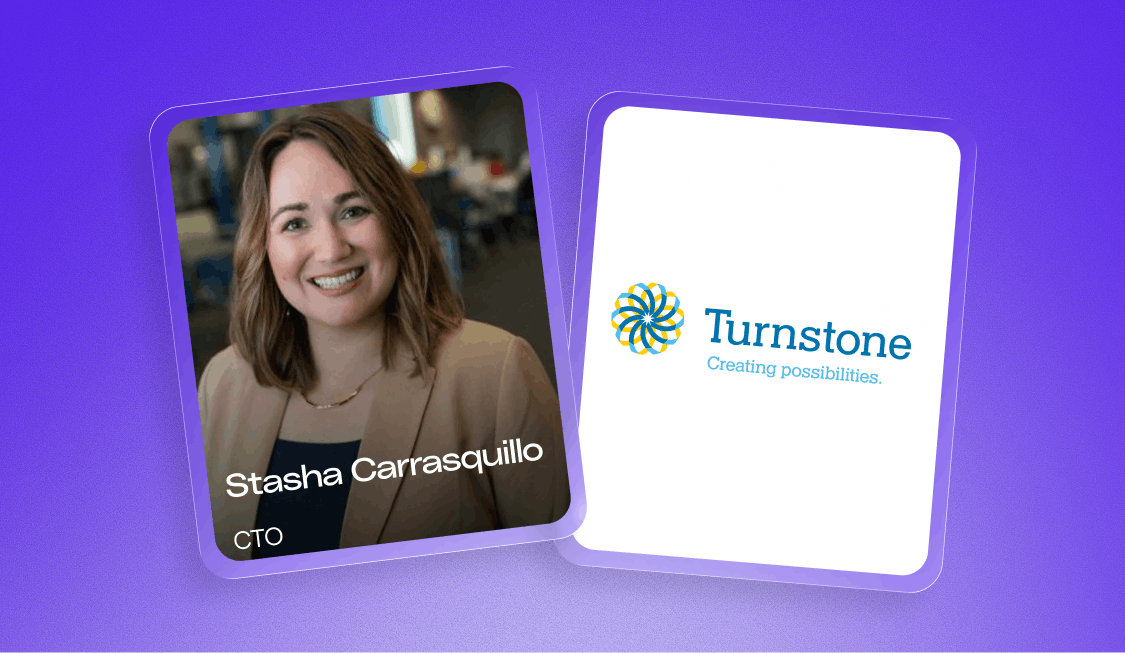
Meet Stasha Carrasquillo, Chief Marketing Technology Officer at Turnstone
Turnstone is a Fort Wayne, Indiana-based nonprofit that maximizes the potential of people with physical disabilities through health, wellness, and sports programs. Stasha Carrasquillo has been bringing strategy and innovation to Turnstone’s marketing team since 2017, with a BA in Communication from Purdue Fort Wayne, an MBA from Indiana Tech, and a Certificate of Strategic Diversity, Equity and Inclusion. She is passionate about using storytelling and technology to advance Turnstone’s mission — values she sees in action every day.
One of her most memorable moments in the role came during the IBSA World Games in 2019, when international athletes filled a stadium in Fort Wayne in a powerful display of unity and celebration. It’s the kind of moment that makes the work concrete.
Stasha also works closely with Tina Acosta, Turnstone’s ADA and Accessibility Advisor, who serves as Indiana’s state affiliate facilitator for ADA Indiana — part of the national network of regional ADA centers. In her role, Tina regularly hears from people who feel their rights as a person with a disability aren’t being met, and that frontline perspective shapes everything she brings to accessibility conversations.
What accessibility barriers do people with physical disabilities face online
Turnstone serves people with a wide range of physical disabilities — wheelchair users, people with limb differences, neurological conditions, and other mobility challenges. The digital barriers this community faces are as varied as the community itself: inaccessible event registration, program information that doesn’t work with assistive technology, and websites that weren’t designed with the people they’re meant to serve in mind.
There is also a subtler barrier that Stasha understands well: when accessibility features are described in terms of diagnostic identity rather than functional benefit, people count themselves out before they even try.
“If you describe something based on an identity, but someone doesn’t identify with that identity, they count themselves out. I don’t have ADHD, I don’t need that — but maybe you like to highlight. I do feel like leading with the benefit of the setting versus the identity is a great direction.” — Stasha Carrasquillo
Accessibility is for everyone — and the stakes double when a person with a disability and the caregiver or support person navigating alongside them both hit a wall. If neither can find the information they need, complete a form, or access a resource, the website has failed the whole relationship. Designing for the disability community means designing for everyone in that ecosystem — the person seeking support and the person helping them get it.
What Stasha brought to the table
Stasha’s presence on the advisory board connects accessiBe’s work to the world of adaptive sport and community wellness — a sector where digital access to scheduling, programs, and support services is genuinely consequential for participation. Her spotlight session on the accessiBe YouTube channel is a tangible example of the kind of storytelling partnership the advisory board enables.
In product testing, her feedback was sharp and practical. She flagged that familiar words can carry the wrong meaning: “profiles” read as a user account, and “manual” read as an instruction booklet. Small language choices that seem neutral can quietly confuse the people who need the tool most. That kind of input is exactly why user testing with people who have disabilities catches things internal review never will.
The takeaway
Turnstone believes in the importance of empowering people with disabilities to maximize their potential, and this motto is a useful frame for digital accessibility too. The question isn’t what someone can’t do. It’s what the environment enables or prevents. Stasha’s leadership and Tina’s contributions are a reminder that even well-intentioned tools become barriers when the language and framing don’t match the people they’re meant to serve.