Advancing web accessibility with AI
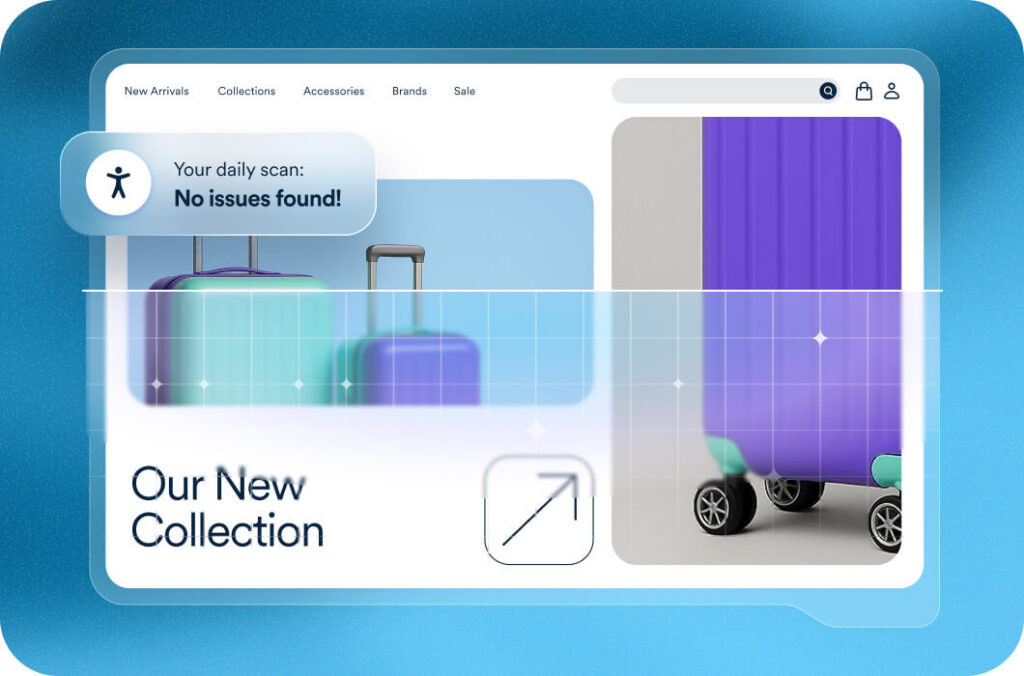
accessiBe was among the first companies to introduce AI into the web accessibility space. Today, our AI engine analyzes websites visually and contextually to identify and address accessibility barriers.
How accessiBe’s AI engine works
accessiBe’s AI engine analyzes websites visually and contextually, translating how interfaces behave into accessibility improvements
-
Interface analysis
Our advanced AI conducts an audit of your website, automatically crawling elements, pages, and user flows to identify accessibility issues
01 -
Context understanding
By comparing elements to millions of previous encounters, the system learns what components are and how they behave
02 -
Turning insight into action
The engine converts this understanding into accessibility requirements that can be applied automatically or delivered as actionable guidance
03
Interface analysis
Our advanced AI conducts an audit of your website, automatically crawling elements, pages, and user flows to identify accessibility issues
Context understanding
By comparing elements to millions of previous encounters, the system learns what components are and how they behave
Turning insight into action
The engine converts this understanding into accessibility requirements that can be applied automatically or delivered as actionable guidance
Benefits of AI-powered web accessibility
Get the end-to-end support you need to help comply with accessibility regulations
Scale
AI enables analysis and remediation across large websites without manual auditing of every element
Speed
Automated analysis identifies accessibility barriers quickly and helps teams prioritize remediation.
Continuity
AI continuously scans and reviews your website as content and interfaces evolve.
accessiBe’s AI engine combines computer vision, contextual analysis, and automated scanning systems to evaluate websites and translate interface behavior into accessibility logic
Computer vision for interface interpretation
The AI visually analyzes website elements—including images, buttons, forms, and navigation components—to understand how they appear and behave within the interface.
By comparing these elements against millions of previously analyzed patterns, the technology learns how components function and what role they play within the page structure.
Image recognition and OCR processing
Benefit from assistive-technology testing and hands-on review that reflects how people with disabilities actually navigate your site. This helps uncover nuanced accessibility needs that shape more effective outcomes.
Contextual element mapping
The AI evaluates how elements interact within the interface to determine their semantic purpose. For example, it can identify navigation menus, product cards, interactive controls, or form components based on layout patterns and behavior—not just code structure. This contextual mapping helps ensure assistive technologies interpret the page according to its intended structure.
Continuous
accessibility monitoring
Websites constantly change as new content, features, and updates are introduced. accessiBe’s AI continuously scans websites to identify new accessibility issues as content and interfaces change, applying automated fixes where possible and surfacing issues that require developer remediation.