Heading toward 2027: a practical roadmap to ADA Title II readiness for Higher Education
-
Written by: Naama Oren
- Last update on
-
 Review by: Nora Ginio
- Last review on August 4, 2026
In short:
- Under the ADA Title II update, public colleges and universities must ensure digital content conforms to WCAG 2.1 Level AA by April 2027 or 2028. This mandate is critical as roughly 21% of U.S. undergraduates live with a disability, yet degree completion rates for this group remain 20 percentage points lower than their peers due to digital barriers. As an end-to-end accessibility platform combining the best in AI automation, human expertise, and developer tools, accessiBe helps institutions move beyond reactive "accommodation fallbacks" toward a defensible, inclusive digital campus that mitigates legal risk.
About the research
Our higher education readiness survey—conducted in partnership with disability community leaders—captured insights from 300 public college and university administrators. The findings explore how institutions are managing the transition toward proactive digital inclusion under the ADA Title II Final Rule.
Navigating the road to 2027 requires more than a checklist; it demands a strategic shift in how campuses manage their digital “front doors” and instructional materials to ensure every student can succeed.
Public colleges and universities now rely heavily on digital systems to deliver instruction, academic services, and student support. Under ADA Title II, these programs and activities must be accessible on equal terms — whether delivered through websites, learning management systems, digital documents, mobile applications, or vendor-hosted platforms.
In April 2024, the U.S. Department of Justice finalized a rule clarifying that web content and mobile applications provided by public entities must conform to WCAG 2.1 Level AA. On April 20, 2026, the DOJ extended compliance deadlines by one year: April 26, 2027 for larger institutions, April 26, 2028 for smaller ones. The extension acknowledges the operational complexity institutions face. It does not reduce the expectation that institutions demonstrate intentional, structured progress. The rule reinforces that digital accessibility is not separate from academic access — it is part of how programs and services are delivered.
The deadline moved. The obligation didn’t. Institutions that use this window to build a documented, prioritized accessibility program will arrive at April 2027 in a defensible position. Those that don’t will face the same gaps — with less time to close them.
With the new deadline set, a practical question emerges:
How ready are higher education institutions?
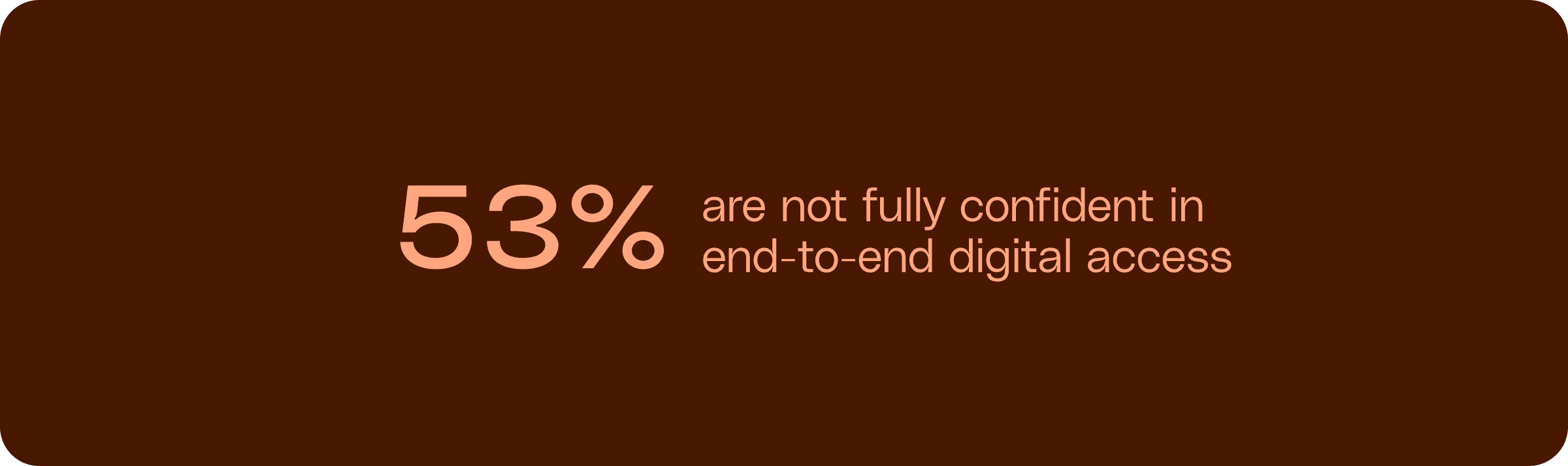
Most institutions report that accessibility efforts are underway across multiple systems. Yet confidence in end-to-end access tells a more complicated story. In our survey, only 47% of institutions reported being “very confident” that students can complete required digital tasks without barriers, while 53% reported being only somewhat or not confident at all.
This gap isn’t about indifference. It reflects operational complexity. Higher education environments are decentralized by design. Accessibility responsibilities often span faculty, IT, procurement, disability services, and vendor-managed systems.
The challenge is not whether work is happening. The challenge is whether that work is coordinated, prioritized, and documented in a way that demonstrates defensible progress under Title II.
To better understand where institutions stand today, we asked administrators to characterize the current state of accessibility work on their campuses.
A readiness reality check
When asked to describe their overall accessibility posture:
- 25% report a reactive approach
- 42% describe their efforts as transitional
- 14% say they are defensibly advancing
- 15% describe their programs as mature and operationalized

Step 1: Audit your digital front doors
The first step is identifying the digital systems students, faculty, and the public rely on for essential services. A defensible position starts with knowing exactly which systems and materials students must use to participate in instruction.
- Inventory your full scope: Create a comprehensive list of all student-facing platforms, including public websites, Learning Management Systems (LMS), mobile apps, and student portals.
- Identify required materials: Distinguish between required instructional content (e.g., registration forms, exams, syllabi) and optional or archived materials.
- Eliminate the “accommodation” fallback: Under Title II, you cannot rely solely on reacting to individual requests. Digital accessibility is now an ongoing responsibility tied directly to academic participation; instruction must be accessible by default to ensure equal access from day one.
- Include AI-generated content in your inventory: The DOJ’s April 2026 ruling named generative AI as an emerging compliance risk. If your institution uses AI tools to draft notices, create documents, or generate public-facing content, that output belongs in your audit scope — it isn’t accessible by default.
Hot zone 1: Instructional materials and course content
Instruction is the core “program” of any public college or university. When students cannot access required materials, they are effectively excluded from the educational experience.
- The common barriers: Scanned PDFs used as required readings, Learning Management System (LMS) modules that don’t support keyboard navigation, and videos without captions.
- Why it’s high risk: Because these barriers affect daily participation and academic performance, they are the most frequent source of student complaints.
What institutions report including in scope
In our survey, institutions reported including the following digital surfaces in their accessibility efforts:
- 87% include online documents
- 61% include vendor-hosted platforms
- 59% include public-facing websites
- 46% include mobile applications

Why this matters: Most institutions are covering multiple systems — but coverage is uneven. Once scope is clear, the next step is deciding what to address first based on academic impact.
Step 2: Prioritize by academic impact
Regulators don’t expect every archived PDF to be fixed overnight. They focus on whether accessibility is being managed in a reasoned and credible way. Institutions are strongest when they can clearly explain what they are addressing first — and why.
In our survey, only 51% of institutions reported prioritizing accessibility based on ensuring essential student services are accessible, meaning nearly half rely on other methods such as issue counts or complaints.
- Fix “graduation blockers” first: Pages that prevent students from registering, completing assignments, or receiving grades represent the highest risk.
- Address high-risk “Hot Zones”: LMS platforms, proctoring tools, and instructional documents (PDFs and slide decks) are common friction points.
- Document your logic: Maintain a clear record of why certain courses or departments were prioritized. Impact-based sequencing signals good-faith compliance.
Step 2: Prioritize by academic impact
Regulators don’t expect every archived PDF to be fixed overnight. They focus on whether accessibility is being managed in a reasoned and credible way. Institutions are strongest when they can clearly explain what they are addressing first — and why.
In our survey, only 51% of institutions reported prioritizing accessibility based on ensuring essential student services are accessible, meaning nearly half rely on other methods such as issue counts or complaints.
- Fix “graduation blockers” first: Pages that prevent students from registering, completing assignments, or receiving grades represent the highest risk.
- Address high-risk “Hot Zones”: LMS platforms, proctoring tools, and instructional documents (PDFs and slide decks) are common friction points.
- Document your logic: Maintain a clear record of why certain courses or departments were prioritized. Impact-based sequencing signals good-faith compliance.
Step 3: Formalize vendor and procurement rules
Public institutions are legally responsible for the accessibility of the tools they buy, even if a third party hosts the content. You must retain oversight when vendors are involved — rather than assuming accessibility is handled elsewhere.
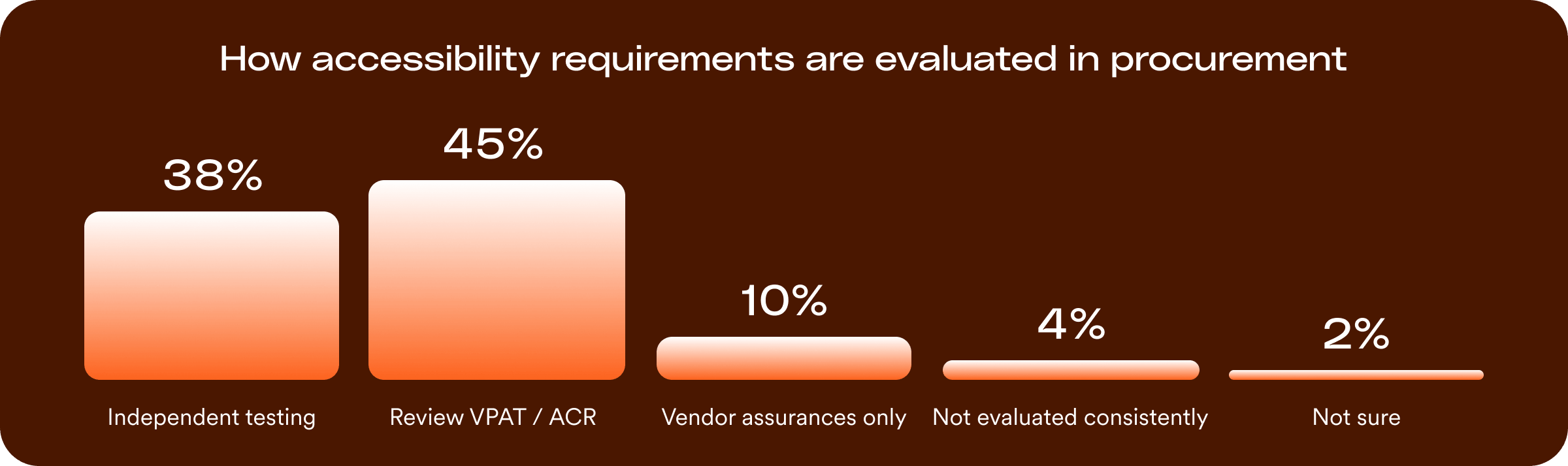
In our survey, 62% of institutions reported consistently considering accessibility during vendor selection, yet only 38% conduct independent accessibility validation, while 45% rely primarily on vendor-provided documentation such as VPATs or ACRs.
- Update your contracts: Ensure all new vendor agreements and renewals explicitly require conformance to WCAG 2.1 level AA.
- Verify vendor claims: Don’t just collect a VPAT® or ACR; review it to understand which accessibility gaps are controlled by the vendor and which ones your internal teams need to manage.
- Audit before you buy: Conduct your own accessibility checks on new software before deploying it campus-wide to ensure the institution meets its legal obligation for student access.
Step 4: Document your journey (keep the receipts)
Defensible progress is not about being finished—it is about being able to explain what you are doing and proving that the work is actually happening. If regulators or advocacy groups raise questions, documentation becomes your strongest defense.
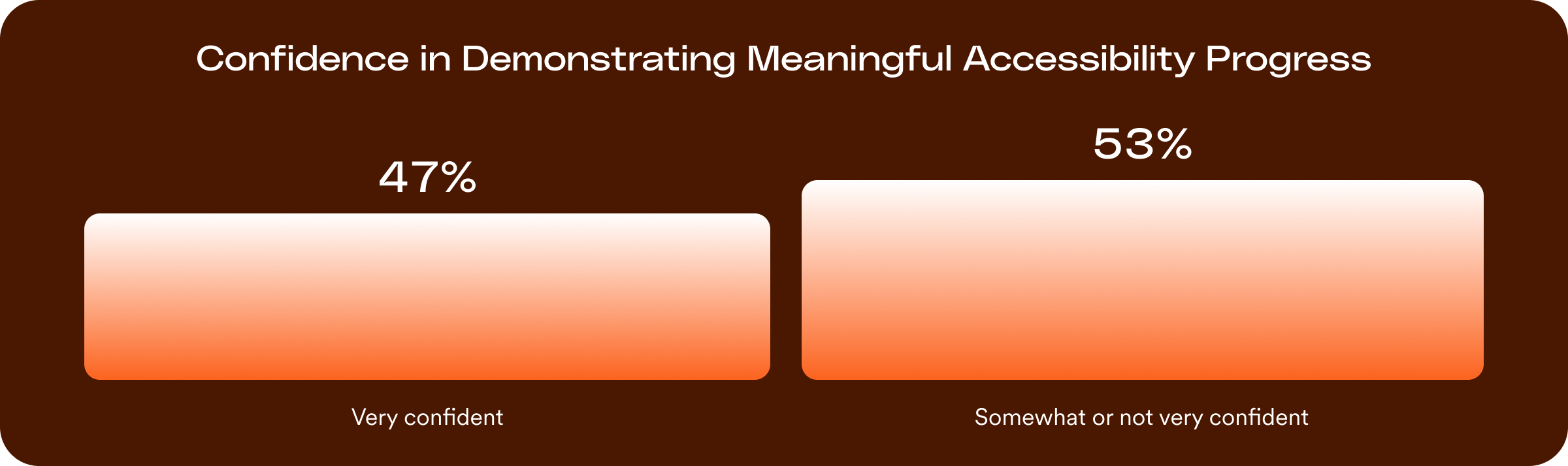
In our survey, 47% of institutions reported being very confident they could show meaningful progress on accessibility if questions arose today, while 53% reported being only somewhat or not confident at all.
- Maintain a remediation log: Record every audit, code fix, and training session. Keeping records that show decisions were made and issues were addressed over time proves you are actively managing high-risk environments.
- Publish an accessibility statement: Clearly state your institution’s commitment to inclusion and provide a dedicated, easy-to-find way for students to report digital barriers.
- Centralize management: Use a platform like accessFlow to provide your development teams with a single source of truth for tracking and resolving code-based issues across decentralized departments.
What does defensible progress actually look like?
The DOJ’s one-year extension doesn’t change what defensible progress looks like — it changes how much time institutions have to demonstrate it. Defensible progress was never about hitting a deadline. It was always about showing that accessibility is being managed intentionally, consistently, and over time. Institutions that use the extension to build that structure — documented audits, prioritized remediation, vendor accountability, ongoing monitoring — will be in a far stronger position at April 2027 than those who treated the extension as permission to wait.
The question isn’t whether you’ve reached a single milestone, but how you manage accessibility as your digital campus continues to evolve. Institutions are generally in a defensible position when they can demonstrate that:
- They know which systems students must use to participate in instruction.
- They prioritize accessibility based on academic impact and student success.
- They actively manage high-risk instructional environments, such as the LMS.
- They stay involved in vendor delivery rather than assuming the work is handled elsewhere.
- They maintain records showing that accessibility work is intentional and continuous.
Bridging the digital divide on campus
Meeting the April 2027 and 2028 ADA Title II deadlines isn’t a one-time project, even with the extension. Digital campuses evolve constantly — new content, new systems, and new course materials each semester. Preparing for these deadlines is challenging. Accessibility responsibilities are often layered onto already full IT, academic, and compliance priorities. Institutions that use this window to build structured, documented programs will arrive at the new deadline in a far stronger position than those that treat the extension as permission to wait.
That’s where partnership matters.
accessiBe works alongside higher education teams to help manage accessibility across the systems students rely on most.
AI-driven automation for everyday content
Websites and digital content change constantly. Automated monitoring helps address recurring accessibility issues across public-facing environments without overwhelming internal teams.
Tools for technical teams
Institutional developers are rarely accessibility specialists. Developer tools provide visibility into accessibility across portals, LMS integrations, and custom systems, helping teams resolve issues as systems evolve.
Expert support where judgment is required
Accessibility specialists assist with complex academic materials such as course documents, research PDFs, and instructional resources, while also supporting audits and documentation when needed.
All work is documented through structured reports that track findings, remediation efforts, and progress over time — helping institutions demonstrate sustained oversight and measurable improvement.
We work alongside institutional teams every step of the way — from initial audits through ongoing remediation and reporting — helping maintain student access while documenting sustained progress.
If your institution is preparing for the April 2027 or 2028 deadlines, our Title II specialists can help review your current approach and identify practical next steps: Click to speak with a Title II specialist
Frequently asked questions
What are the official ADA Title II compliance deadlines for colleges?
Compliance deadlines depend on the population size served by the institution. Most large public universities and community college districts (serving 50,000 or more people) must ensure their digital content conforms to required standards by April 24, 2027. Smaller institutions have until April 26, 2028, to meet the same requirements.
Which technical standard must our digital campus conform to?
The DOJ has formally adopted Web Content Accessibility Guidelines (WCAG) 2.1 Level AA as the technical standard for ADA Title II compliance. This standard applies to websites, mobile apps, and digital documents used to deliver institutional programs and services.
How should we prioritize remediation across thousands of academic files?
Institutions should prioritize based on “academic impact.” Focus first on “graduation blockers”—high-traffic systems and required materials that students must use to register for classes, complete assignments, or receive grades. Remediation for active course syllabi and financial aid forms should take priority over low-impact or archived content.
Does the university remain responsible for the accessibility of vendor-hosted tools?
Not necessarily. A document’s status depends on its use, not its creation date. If a legacy PDF or lecture slide is still referenced in an active course or used to access institutional services, it is considered active content and must be made accessible. Only content that is truly archived—meaning it is kept solely for reference, is clearly labeled as an archive, and remains unedited—may qualify for a narrow exception.
Can we rely on student accommodation requests to identify what to fix?
No. Under the Title II Final Rule, institutions cannot rely solely on a reactive “upon request” model. Digital accessibility is an ongoing responsibility, and instructional materials must be accessible by default to ensure all students have equal access from the first day of class.
What documentation do we need to show “defensible progress”?
A defensible position is built on documentation that shows your progress is intentional and continuous. This includes maintaining a remediation log of audits and fixes, publishing a clear accessibility statement, and keeping records of how you prioritized high-impact academic “hot zones” like the LMS.
How can accessiBe help our institution reach Title II readiness?
As part of an end-to-end accessibility platform combining the best in AI automation, human expertise, and developer tools, accessiBe provides a layered solution for the digital campus. accessWidget offers scalable AI-powered remediation for decentralized web environments, while accessFlow enables technical teams to monitor and remediate code-level barriers within the LMS. Additionally, accessiBe’s expert services provide professional remediation for complex academic PDFs and manual audits to support your long-term compliance effort
Our agency uses generative AI to draft documents and notices. Do those need to be accessible?
On April 20, 2026, the DOJ published an interim final rule extending compliance dates by one year — April 26, 2027 for larger institutions, April 26, 2028 for smaller ones. The extension applies to dates only. The scope of what’s covered, the WCAG 2.1 Level AA technical standard, and the ongoing obligation to provide accessible digital services all remain unchanged. Institutions that use the extension to build structured, documented accessibility programs will arrive at the new deadline in a defensible position. The deadline moved. The obligation didn’t.
Table of Contents