This blog is part of our GAAD (Global Accessibility Awareness Day) series spotlighting members of accessiBe’s Inclusive Product Advisory Board — disability community leaders and advocates helping shape how accessibility is built in practice. Advisory board sessions are moderated by Josh Basile, accessiBe’s Community Relations Manager, C4-5 quadriplegic, and disability rights advocate.
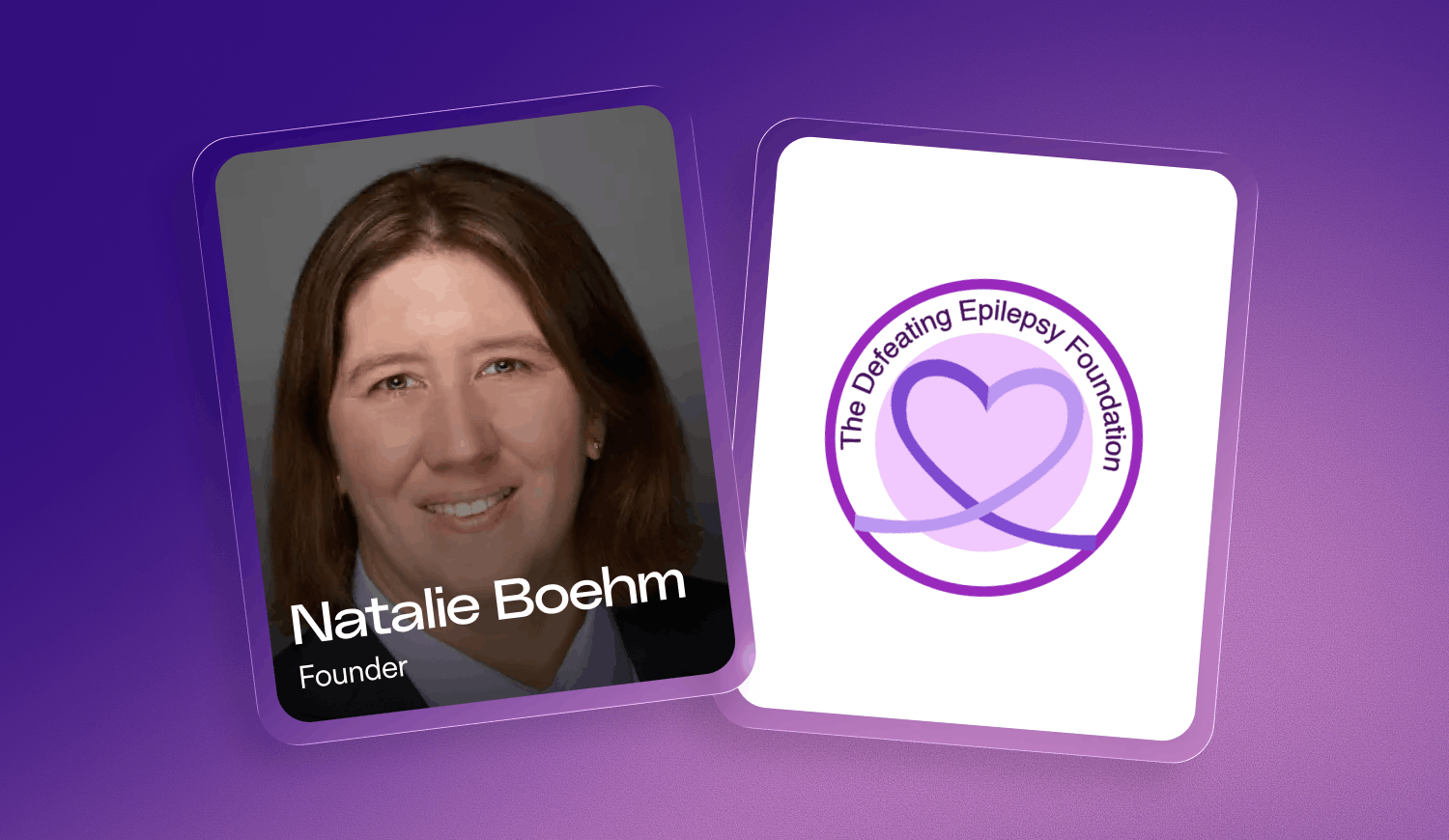
Meet Natalie Boehm, founder of the Defeating Epilepsy Foundation
Natalie Boehm was diagnosed with epilepsy at age two, following a traumatic brain injury. She grew up in a world that didn’t fully understand her condition, and made a decision early on that epilepsy would not define what she was capable of.
Today, she holds an MBA in strategic leadership and leads the Defeating Epilepsy Foundation, a 501(c)3 nonprofit focused on advocacy and education grounded in lived experience for people with epilepsy and seizure disorders.
“A lot of the things that most people think people with epilepsy don’t have the capability of achieving — I’ve made it my goal to enjoy those things in life.” — Natalie Boehm
She founded the organization to address a gap: many national efforts focus on research and policy, but not enough on what it actually means to live with epilepsy day to day. The Foundation serves a community that is often misunderstood — epilepsy is not a single condition with a single presentation, and the barriers people face online are correspondingly varied and often invisible to others.
What accessibility barriers do people with epilepsy face online?
For most people, epilepsy and accessibility brings to mind one thing: photosensitive content — flashing images, strobing animations, rapidly shifting color contrasts that can trigger seizures. That matters. But it’s only part of the picture.
3.4 million Americans have active epilepsy. 70% can control their seizures through treatment, yet assumptions persist. Natalie traces this to a failure of education — and its consequences show up online as much as anywhere else.
“People automatically assume you’re a liability… it really comes down to the unknown.” — Natalie Boehm
Epilepsy also regularly co-occurs with other conditions. About 30% of the epilepsy community also has autism. Many people with epilepsy, including Natalie, experience cognitive side effects from seizure medications. The result is a community whose accessibility needs are layered, and may require more than one type of support at once.
What Natalie brought to the table
In advisory board discussions, Natalie raised a product question that cut to the heart of how accessibility tools are designed: what happens when a user needs more than one accommodation at the same time?
“Would they be able to turn on both features? For example, there’s about 30% of the epilepsy community that also has autism.” — Natalie Boehm
The question opened up a broader design challenge. The accessWidget’s Seizure Safe Profile directly addresses photosensitive needs, and users can combine individual adjustments for overlapping needs. But Natalie’s insight pushed the conversation further — not just whether multiple features can be enabled, but whether users can easily understand how to do that. She suggested accessible guidance, like a short video walkthrough for people who need more than one profile, making the path to multi-feature use clear and low-friction.
That kind of practical, user-centered thinking is now shaping how customization and multi-adjustment workflows are communicated within the product.
“It makes me happy — it shows me that people are thinking outside the box, that for some of these tools, there’s more than one group of disabilities or communities that will benefit.” — Natalie Boehm
The takeaway
Building for real users means building for complexity. The epilepsy community makes this clear: photosensitivity is one need, cognitive variability is another, and social stigma is a third. None exist in isolation. Natalie’s perspective is helping ensure accessiBe’s products reflect that reality.
The Defeating Epilepsy Foundation’s work on education and support for the epilepsy community is essential reading for anyone who wants to understand the full scope of what living with epilepsy means, beyond the visual trigger warnings.
Donate to the Defeating Epilepsy Foundation