Legal marketing experts at LISI recently made a sharp argument: in 2026, a law firm’s website isn’t just a digital brochure—it’s the receptionist, the intake coordinator, and the first impression, all at once. Clients aren’t just browsing; they’re evaluating. And they’re doing it in seconds.
They’re right. But this argument has a vital prerequisite that deserves to be highlighted: for a website to truly serve as a firm’s digital front door, it must be open to everyone.
“As a trial attorney and a person with a disability, I know firsthand that justice delayed is justice denied—and in the digital age, a digital barrier is a closed door to justice,” says Josh Basile, Esq. “If a firm’s website isn’t accessible, they are effectively telling 25% of the population that their legal needs don’t matter.”
The UX conversation has a missing chapter
LISI covers the essentials well—mobile-first design, intuitive navigation, authentic content, and clear calls to action. These are no longer just trends; they are the foundation for any law firm serious about converting visitors into clients.
However, these qualities depend on accessibility to function as intended. Fast load times don’t assist a user whose screen reader can’t parse your navigation. A beautifully designed intake form becomes a barrier the moment someone with a motor impairment cannot operate it via a keyboard. Clear, high-contrast typography isn’t just a design choice—it’s what makes a page usable for someone with low vision.
Accessibility isn’t a separate workstream from UX; it is the foundation upon which great UX is built.
For law firms, the stakes are higher
Under Title III of the ADA, law firms are considered public accommodations. This means your website is legally required to provide equal access to people with disabilities. To meet this standard, courts and regulatory bodies consistently look to WCAG 2.1 Level AA as the benchmark for digital accessibility.
The litigation environment reinforces the need for a proactive approach. With digital accessibility lawsuits on the rise, law firms face a unique reputational risk. If equal access and justice are at the heart of your practice, an inaccessible website creates a disconnect between your firm’s values and its digital presence.
Beyond mitigating legal risk, there is the market to consider. Roughly 1 in 4 U.S. adults lives with some form of disability. An accessible website ensures you are reaching the full range of people who may need your expertise.
What accessible legal design actually entails
To support your ADA compliance efforts and conform to WCAG, your design and content choices should include:
- Keyboard navigation: Every interactive element—consultation forms, dropdown menus, and chat features—must be navigable without a mouse.
- Screen reader compatibility: Proper semantic HTML and ARIA attributes allow assistive technologies to interpret your content accurately, ensuring the information hierarchy makes sense when read aloud.
- Color contrast: To conform to WCAG, a minimum 4.5:1 contrast ratio for body text is recommended. This supports users with low vision and improves readability for everyone.
- Meaningful alt text: Team photos, case results, and infographics need text descriptions to provide the same context to those who cannot see the images.
- Accessible documents: Accessibility shouldn’t stop at the webpage. Intake forms and retainer agreements in PDF format should also be optimized for assistive technology.
Accessibility as a sustainable practice
Many firms treat accessibility as a one-time project—audit, fix, and finish. However, law firm websites are living assets. As you publish new blogs, update bios, or add practice areas, you must ensure accessibility is maintained.
The firms navigating this successfully are those that treat accessibility as an ongoing commitment. They utilize an end-to-end accessibility platform combining the best in AI automation, human expertise, and developer tools.
This layered approach is essential for long-term success:
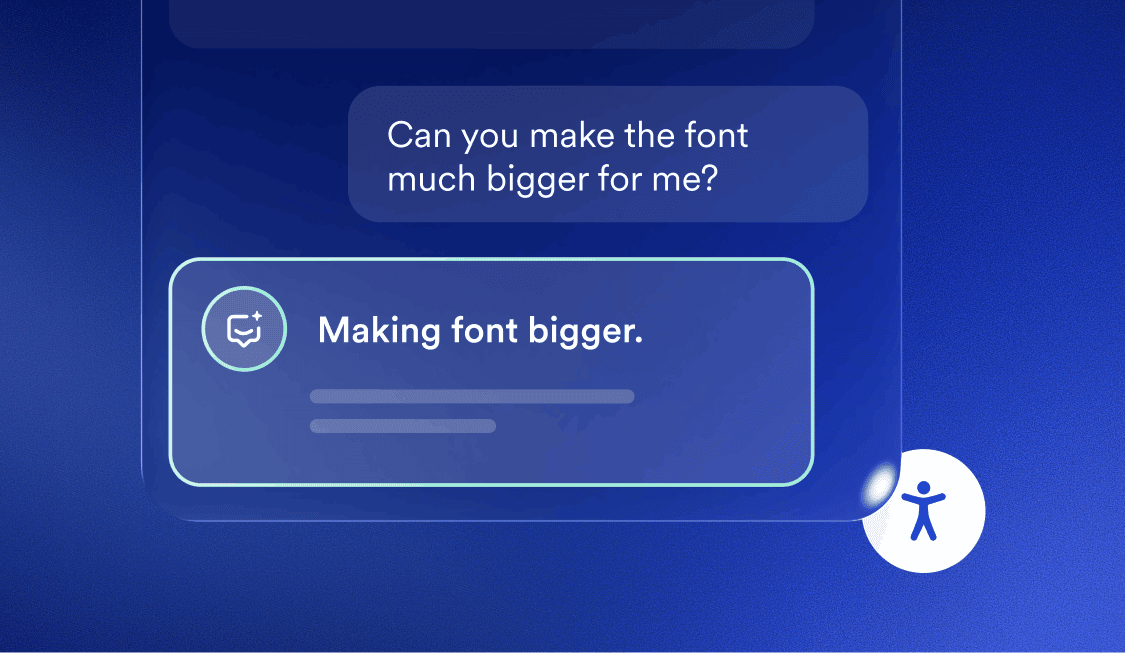
- AI-powered solutions (like accessWidget) provide an accessibility interface for real-time user UI adjustments and handle background remediation.
- Developer-focused tools (like accessFlow) help teams catch and fix issues at the code level during the creation process.
- Expert human review (accessServices) provides the deep-dive auditing needed for complex, sensitive user journeys, such as client intake portals.
The bottom line
Your website is your most important business development tool. But a tool that isn’t inclusive can’t perform at its full potential. The law firms that lead in 2026 will be those that view accessibility not as a burden, but as an expression of their commitment to the public—and a smart investment in every potential client they serve.