In government procurement, accessibility is a gatekeeper
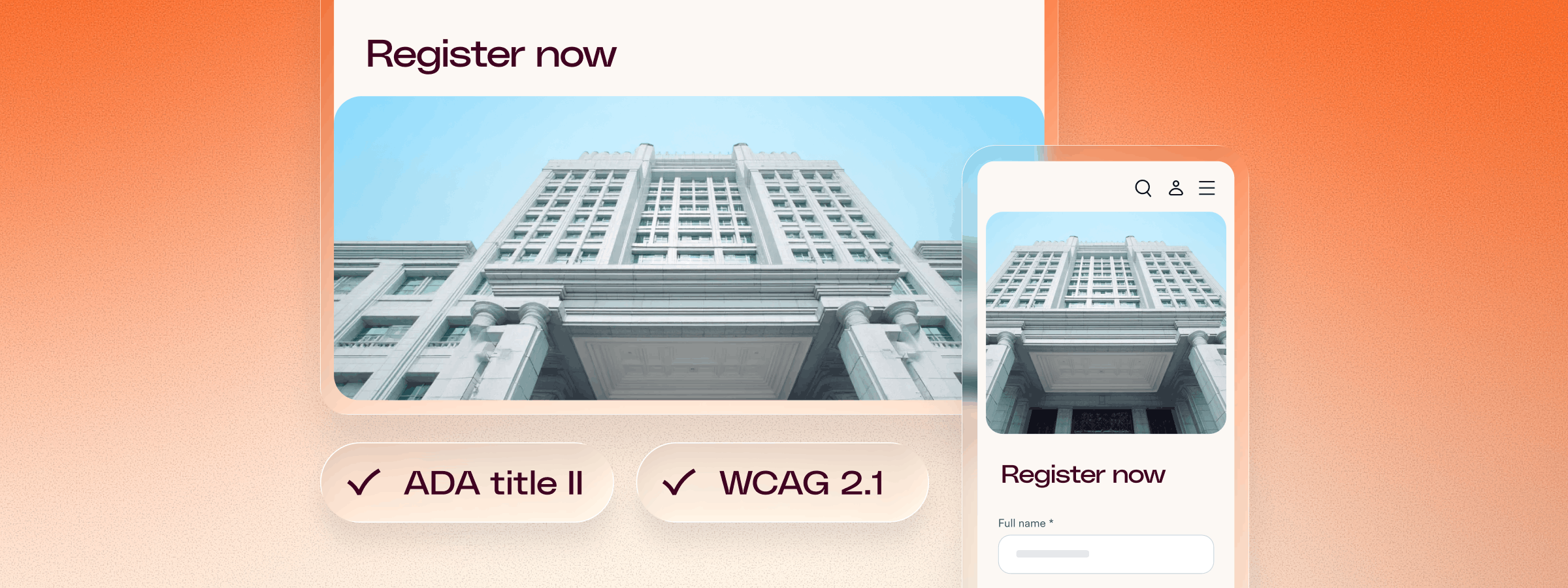
State and local agencies can’t legally deploy inaccessible digital tools. Under ADA Title II, that responsibility extends to the software and platforms they procure — meaning vendors are part of the compliance surface. If you can’t demonstrate accessibility when asked, your bid risks delay, additional review cycles, or disqualification. Accessibility isn’t just about compliance — it’s about staying competitive in the public sector market.
In practical terms, agencies cannot meet their legal obligations if the tools they purchase create barriers. Vendors must be prepared to document conformance, respond to accessibility review, and support ongoing compliance expectations.
In this guide, you will learn about the specific regulations governing government agency procurement, the documentation required to bid on public contracts, and how to ensure your product remains a viable choice for agency administrators.
Understanding the laws governing government accessibility
ADA Title II: State and local government
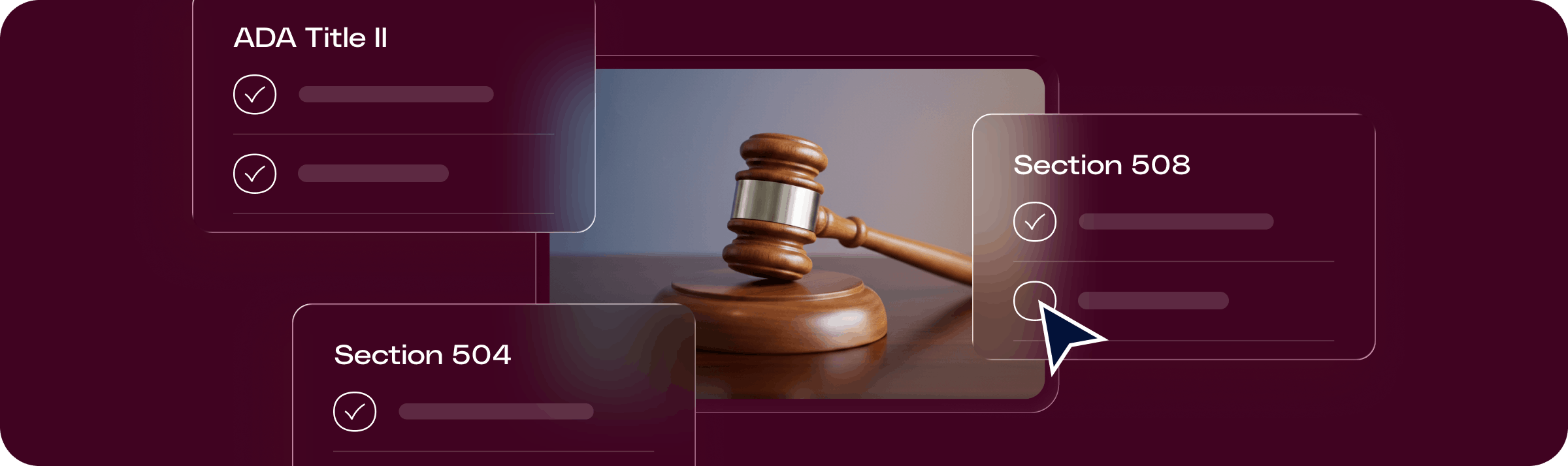
ADA Title II applies to all “public entities” at the state and local level. This includes city halls, county offices, police departments, election boards, and state agencies. In April 2024, the DOJ finalized a rule establishing the Web Content Accessibility Guidelines (WCAG) 2.1 Level AA as the official technical standard.
- The Deadlines: Large agencies (serving 50,000+ residents) must comply by April 24, 2026. Small agencies and special districts have until April 26, 2027.
- The Impact: Any vendor providing a portal for paying taxes, applying for permits, or accessing public records must meet these criteria to prevent the agency from falling out of compliance.
Section 504: The federal funding bedrock
Section 504 of the Rehabilitation Act prohibits disability discrimination in any program or activity that receives federal financial assistance. Because almost all state and local agencies—from rural health clinics to state departments—receive some form of federal grant or funding, Section 504 is a constant, mandatory requirement.
While ADA Title II applies to the government entity itself, Section 504 specifically protects the rights of individuals to have an equal opportunity to participate in or benefit from programs.
For vendors, this means if your digital service is part of an agency’s “programmatic offering,” it must be accessible by default. To satisfy these requirements, digital content must conform to WCAG 2.1 Level AA.
Section 508: ICT and federal standards
Section 508 of the Rehabiliation Act requires that all Information and Communication Technology (ICT)—including your software platforms, mobile apps, and the digital documents or PDFs your system generates—be accessible. It primarily applies to all federal agencies and any vendors or contractors doing business with them.
Section 508 explicitly adopts WCAG 2.0 Level AA as its technical benchmark for digital content.
Furthermore, many states have adopted their own versions of this law (often called “mini-508” laws) for state-level procurement. These laws require vendors to provide a VPAT during the bidding process to document how their software conforms to the WCAG standards.
WCAG’s role in achieving compliance
Developed by the World Wide Web Consortium (W3C), the Web Content Accessibility Guidelines (WCAG) are the global technical standards for digital accessibility. Throughout the years, there have been a number of WCAG versions: 2.0, 2.1, and 2.2—the most current and up to date. Each version defines three levels of conformance to measure accessibility:
- Level A: The lowest level of conformance (essential accessibility).
- Level AA: The standard level referenced in most global accessibility regulations, including those for government agencies.
- Level AAA: The optimal and most difficult level of conformance to achieve.
To comply with ADA Title II and Section 504, you will need to ensure your digital products adhere to WCAG 2.1 Level AA. Complying with Section 508 currently requires meeting WCAG 2.0 Level AA, though many agencies now push for 2.1 as a best practice.
What WCAG Level AA adherence actually entails
While fully adhering to WCAG requires meeting dozens of specific criteria, here are a few examples of what you will need to do for your digital product:
- Keyboard-only navigation: Ensure every button, menu, and form field is usable without a mouse.
- Maintain color contrast ratios: Use text that has a sufficient contrast ratio against its background (at least 4.5:1) to remain readable for users with low vision.
- Support responsive orientation: Ensure your product functions in both portrait and landscape modes without losing data or functionality.
- Allow for reflow and zoom: Enable users to zoom in up to 200% without needing to scroll horizontally to read content.
- Ensure screen reader compatibility: Implement clear programmatic labels for all form fields, icons, and buttons so assistive technology can accurately explain their purpose.
For a more complete list of action items, press here.
Where the responsibility lies: vendor vs. government
It is important to be clear about where the legal and professional stakes sit in this partnership.
While the government agency is the “public entity” that holds the direct legal liability under the ADA, they cannot fulfill their legal duties if your product creates a barrier.
If a citizen cannot pay a utility bill or access an emergency alert due to a software flaw, the agency faces the legal claim, but the vendor faces the immediate commercial fallout.
For vendors, the risk is a direct hit to the bottom line:
- Contract termination: Most modern public sector contracts now include “termination for cause” clauses if a product fails to meet accessibility standards.
- Exclusion from RFPs: Procurement officers increasingly use accessibility as a primary filter. If you cannot provide an accurate VPAT, your bid may be disqualified before it’s even reviewed.
- Loss of market share: Being an “inaccessible” vendor means being an uncompetitive one in an environment where accessibility is now a prerequisite for doing business.
Bottom line: While the government carries the legal risk, the vendor carries the performance risk.
If your product prevents an agency from meeting its legal mandate, you are in breach of contract.
In a market where accessibility is a primary procurement filter, failing to deliver an accessible “engine” means risking existing revenue and future bid eligibility.
So, what is expected of you – the vendor?
Public sector procurement is shifting from “reactive” (fixing it when a citizen complains) to “accessible by default.” This shift is managed through three key phases:
Assess your level of accessibility
This begins with a comprehensive audit of your product against WCAG 2.1 Level AA. This requires manual testing with assistive technologies like screen readers (NVDA, JAWS) and keyboard-only navigation. For vendors, this audit identifies “service blockers” that could prevent a citizen from accessing vital government resources. To gain further insight, many vendors also incorporate user testing with members of the disability community.
Fill in a VPAT
The Voluntary Product Accessibility Template (VPAT) is a standardized blank form used to document a product’s accessibility. It is the industry-standard template that procurement officers use to compare different software options. Once you fill out the VPAT with your audit findings, it lives as an Accessibility Conformance Report (ACR). Government procurement officers now strictly require a finished ACR; they no longer accept vague promises, but need a document that honestly states where you conform and where you have gaps.
Take action to bridge gaps
Once your current state is documented, you must remediate identified issues. This involves prioritizing fixes for high-impact blockers (like non-functional buttons or unlabeled forms) and establishing a clear roadmap for long-term conformance. Many vendors consider end-to-end accessibility platforms to streamline this process, ensuring that new updates are “born accessible.”
How accessiBe can help

accessiBe is an end-to-end accessibility platform combining the best in AI automation, human expertise, and developer tools to help you support your clients’ readiness for the 2026 and 2027 deadlines:
- accessServices: Our professional services team performs the expert manual audits and user testing that automation alone cannot. We assist you by filling in the VPAT so that your product has a completed ACR to provide to government procurement officers. This provides the third-party validation that builds trust with your clients.
- accessWidget: For real-time, scalable inclusivity, accessWidget handles UI and design-related elements. It provides immediate keyboard and screen reader compatibility for public portals and agency websites.
- accessFlow: This developer-focused platform provides your technical teams with a single source of truth for auditing and resolving code-based issues. It identifies WCAG 2.1 gaps in your source code so you can fix them before the procurement process begins.
Frequently asked questions about government agency procurement
Q1. What are the key deadlines for ADA Title II compliance?
A1. The compliance timeline depends on the size of the government agency you are serving. Large agencies (serving 50,000+ residents) must ensure their digital content conforms to WCAG 2.1 Level AA by April 24, 2026. Small agencies and special districts have until April 26, 2027. Vendors must ensure their products are ready before these dates to remain viable partners in the public sector.
Q2. What is a VPAT, and why is it necessary for winning government contracts?
A2. A Voluntary Product Accessibility Template (VPAT) is a standardized form used to document how your digital product conforms to accessibility standards. Once completed, it becomes an Accessibility Conformance Report (ACR). Government procurement officers now strictly require a finished ACR to verify your product’s accessibility; without it, your bid may be disqualified before the review process even begins.
Q3. Does the government or the vendor hold the legal liability for accessibility?
A3. While the government agency is the “public entity” that holds direct legal liability under the ADA, the vendor carries the performance risk. If your software creates a barrier that prevents an agency from meeting its legal mandate, you face immediate commercial fallout, including potential contract termination or exclusion from future RFPs.
Q4. What is the difference between ADA Title II and Section 508?
A4. ADA Title II applies specifically to state and local government entities, requiring conformance to WCAG 2.1 Level AA. Section 508 applies to federal agencies and their contractors, requiring that Information and Communication Technology (ICT) be accessible and currently benchmarks against WCAG 2.0 Level AA. Both laws ensure that people with disabilities have an equal opportunity to benefit from government programs.
Q5. Can I rely solely on automated tools to fill out my VPAT?
A5. No. A reliable VPAT requires a comprehensive audit that includes manual testing with assistive technologies like screen readers (NVDA, JAWS) and keyboard-only navigation. accessiBe provides accessServices to perform these expert-led audits, helping you provide an accurate and trustworthy ACR that builds confidence with government procurement officers.
Q6. How does accessiBe help vendors support their clients’ compliance efforts?
A6. accessiBe is an end-to-end accessibility platform combining the best in AI automation, human expertise, and developer tools. We help vendors identify WCAG gaps through accessFlow, provide professional auditing and VPAT support through accessServices, and offer accessWidget to help make public-facing portals accessible and inclusive for all users.