Over the past year, we’ve spent time listening closely to our customers, partners, and our own teams. One theme came up consistently: accessibility work has become more complex, more ongoing, and more embedded in how digital products are built and maintained.
Websites today are living systems. They evolve continuously through new features, content updates, and integrations. As those experiences grow, accessibility requirements shift alongside them. We have learned that no two websites are the same—and maintaining accessibility across this diverse digital landscape takes more than a single tactic.
Those conversations shaped the next phase of our platform: accessiBe 2.0.
This phase represents our evolution from a tool into a complete accessibility platform designed to support you with greater stability, clarity, and predictability.
Adapting to a shifting accessibility landscape
Digital accessibility today looks very different than it did even a few years ago. Websites are no longer static destinations—they’re dynamic, interconnected experiences shaped by frameworks and product decisions unique to each organization.
As teams release new features and expand across platforms, accessibility must move alongside that change. We understand that what works for one site may not be sufficient as experiences—and user expectations—grow in scale and complexity. This is especially true for larger organizations, whose expanding digital footprints are increasingly expected to demonstrate consistent, well-documented accessibility efforts over time.
Through ongoing conversations, one thing became clear: while automation remains foundational, it isn’t always enough on its own.
Mitigating legal risk and supporting long-term goals calls for a multi-layered approach—one that combines automation with expert insight and tools that integrate naturally into your design, development, and governance workflows.
Expanding our solution suite to support your accessibility goals more completely
As accessibility expectations continue to evolve, we’ve been focused on where our platform needs to go next. Not by adding isolated capabilities, but by strengthening how our solutions work together across automation, expert services, and development workflows. accessiBe 2.0 reflects a shift in how we support accessibility, designed to address the layers of complexity that emerge as your digital environment grows.
So, what actually changed?
Bringing human expertise and automation together with MTCR
Automation remains a critical foundation for accessibility at scale. Our AI-powered solution, accessWidget, supports more than 85,000 websites in their efforts to conform to WCAG and support compliance with regulations like ADA Titles II and III and the European Accessibility Act (EAA) – in adherence to the Web Content Accessibility Guidelines (WCAG).
But as digital experiences become more complex, certain challenges benefit from closer, human-led review—particularly within high-impact user journeys where context and precision matter most.
Manual Testing and Customer Remediation (MTCR) was introduced to strengthen outcomes across the most critical parts of your digital experience. For complex user journeys—such as checkout paths or onboarding sequences—MTCR adds targeted testing to provide the context that automation alone may not capture.
When accessibility gaps are identified, we apply focused enhancements to reinforce accessWidget’s behavior. This combined approach allows you to maintain the scale of automation while applying deeper review where it has the greatest impact, taking on the heavy lifting so your teams don’t have to.
A more powerful, developer-first platform with accessFlow
that fit naturally into how you build and test software. We believe accessibility is most effective when integrated directly into your existing development lifecycle.
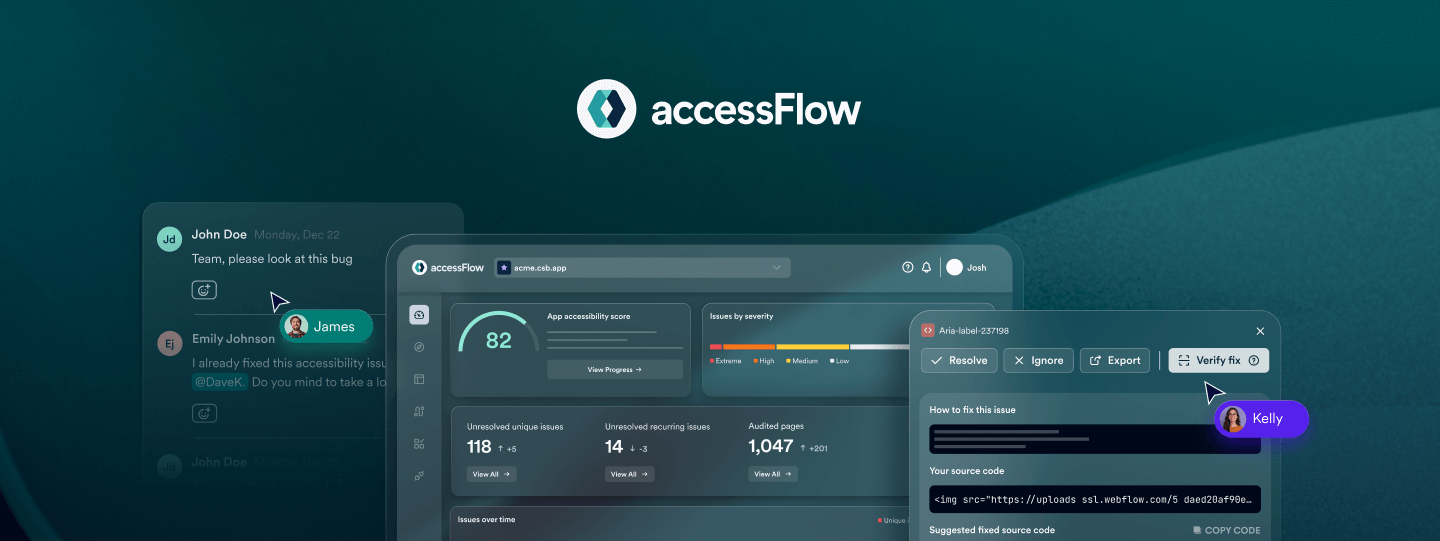
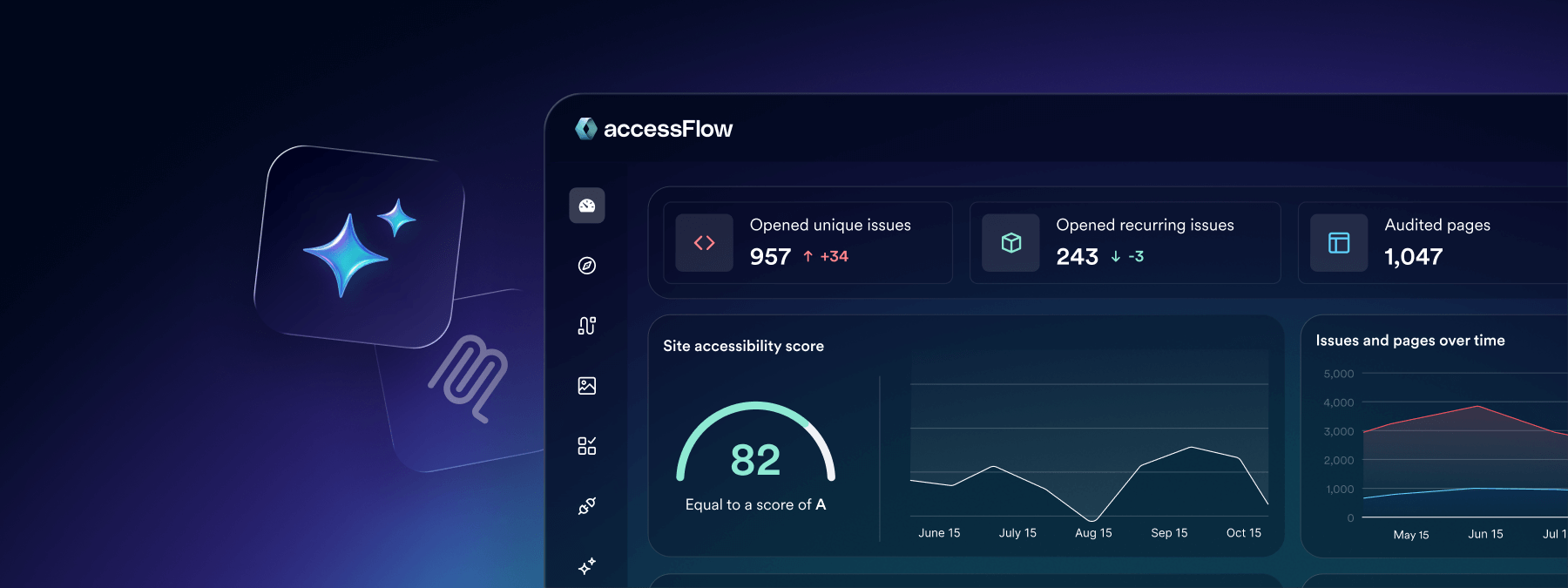
accessFlow supports this by enabling your team to audit, monitor, and remediate issues directly in the source code.
Recent updates to accessFlow strengthen this integrated approach. The new SDK brings accessibility checks into your CI/CD pipelines, while the Model Context Protocol (MCP) delivers real-time guidance within the tools your developers already use.
Combined with AI-powered enhancements like false positive verification and automated alt-text generation, these updates allow your team to treat accessibility as an ongoing, trackable engineering practice.
Supporting you through a more complex legal environment
As accessibility expectations continue to mature, many organizations are navigating a legal landscape that is more active and more nuanced than in the past. Larger and more visible digital properties, in particular, are often expected to demonstrate not just intent, but sustained and well-documented accessibility efforts.
To help customers navigate these situations, accessiBe has strengthened the support available when accessibility-related legal questions arise.
Our Litigation Support Package is designed to provide structured assistance, including expert review, accessibility documentation, and access to an ADA expert attorney.
This support is intended to complement ongoing accessibility work by helping organizations respond clearly and confidently when their efforts are examined—reinforcing accessibility as a continuous, good-faith practice rather than a reactive exercise.
Expanding our approach to meet evolving accessibility needs
As our work in accessibility has evolved, so has our understanding of what it takes to build solutions that perform well in real-world use. Supporting complex digital experiences—particularly those that sit at the center of how people engage with products and services—requires deeper context and a closer connection to the people who use them.
We’ve long worked alongside people with disabilities to inform our thinking. Over the past year, we took that involvement further by formalizing and expanding how lived experience is incorporated into our development process.
Through the establishment of our Inclusive Product Advisory Board and the deeper integration of accessLabs, our team of developers who are blind, these perspectives now play a more direct role in shaping priorities, validating decisions, and guiding how our platform evolves.
This shift influenced how accessiBe 2.0 comes together today—reflecting a more intentional, end-to-end approach designed to support accessibility as a sustained, organization-wide practice.
accessiBe: Your partner for accessibility and compliance
The additions we’ve introduced build on the tools and services many of you already rely on. accessWidget—now fully supporting WCAG 2.2 Level AA adherence—continues to play a central role in helping websites become accessible for people with disabilities. Its availability as an app across major site builders, including Shopify, WordPress, and Wix, helps make accessibility more achievable for small businesses and emerging teams.
Looking ahead, our focus remains on the people who use your digital experiences every day.
By continuing to listen to customers and incorporate perspectives from the disability community into how we build, we’re committed to evolving the platform thoughtfully—so it continues to support inclusive, accessible experiences as expectations and technologies change.