accessFlow is accessiBe’s source code accessibility platform, and is the second layer in accessiBe’s three-layer accessibility platform, sitting between accessWidget‘s runtime remediation and accessServices’ expert audits and documentation. It integrates into CI/CD pipelines and IDE environments to catch Web Content Accessibility Guidelines (WCAG) issues in code before they reach production. The most efficient place to fix an accessibility issue is before it ships: when a developer catches a missing form label during code review, the fix is a one-line change; when the same issue is discovered on the live site months later, the cost in time, effort, and risk is dramatically higher.
What accessFlow does
CI/CD integration
accessFlow connects to your build pipeline and runs accessibility checks as part of the deployment process. Issues discovered before release appear in the same workflow developers use for other quality checks. Teams configure severity thresholds, failing the build on accessibility errors, flagging warnings for review, and track conformance progress through a dashboard.
Issue management and workflow
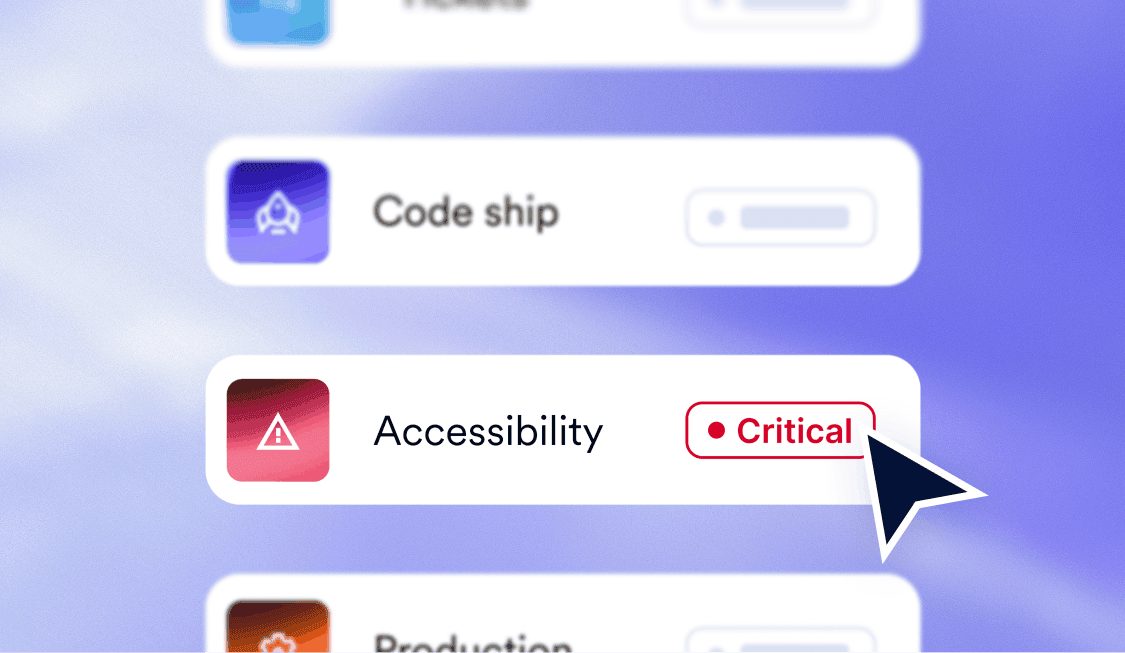
accessFlow’s dashboard presents issues grouped by severity, page, and WCAG criterion. Issues can be assigned, tracked, and marked resolved. As fixes are deployed, accessFlow’s next scan reflects the improvement, providing a visible record of progress for product managers and engineering leads.
What accessFlow doesn’t do
accessFlow detects and surfaces accessibility issues; it does not apply automatic fixes to source code. This is intentional. An AI-generated code fix might resolve the detected issue while introducing another, or be syntactically correct but functionally wrong for the specific component. Developers are best positioned to evaluate how an issue should be fixed in context. accessFlow gives them the information to make good decisions; it doesn’t make those decisions for them.
Who accessFlow is for
accessFlow is designed for teams with development capacity and a commitment to addressing accessibility in the build process. It is well-suited to organizations that ship new code frequently, maintain large or complex web applications, or are subject to formal accessibility requirements. It’s also a natural fit for teams that have previously identified significant source-code issues in an audit.