Enterprise digital systems evolve constantly, with frequent code changes released across multiple teams and products. In this fast-moving environment, accessibility becomes more effective when it’s built into the same engineering workflows that support reliability and continuous improvement.
CI/CD pipelines already help teams ship updates quickly and consistently. When accessibility is included in these workflows, organizations gain earlier visibility into potential barriers, reduce regressions, and create a more predictable path toward accessible, inclusive digital experiences—especially at enterprise scale.
Understanding the accessibility challenge for enterprises
Laws such as the Americans with Disabilities Act (ADA) and the European Accessibility Act (EAA) establish the expectation that digital experiences are accessible to people with disabilities.
While these requirements apply to organizations of all sizes, enforcement and scrutiny often increase as a company’s visibility, traffic, and influence grow.
High-profile websites and applications reach broader audiences and carry greater impact when accessibility barriers exist, which raises expectations that they align more comprehensively with accessibility standards.
Enterprise digital environments also introduce a higher degree of complexity.
Large codebases, custom components, multi-step user journeys, and frequent releases across distributed teams all create more opportunities for accessibility issues to appear. Because these systems evolve constantly, aligning with the Web Content Accessibility Guidelines (WCAG)—the widely accepted framework for building accessible digital experiences—becomes an ongoing, in-depth effort rather than a one-time remediation project.
This combination of complexity and visibility is why many enterprises are embracing a deeper, code-level approach to accessibility.
Automated tools remain valuable for scale and initial detection, but long-term accessibility increasingly depends on integrating accessibility directly into engineering workflows. By building accessibility into the development process, organizations can create more durable improvements, reduce regressions, and support more reliable progress toward accessibility and compliance goals.
Why enterprises stand to benefit from adopting code-based accessibility
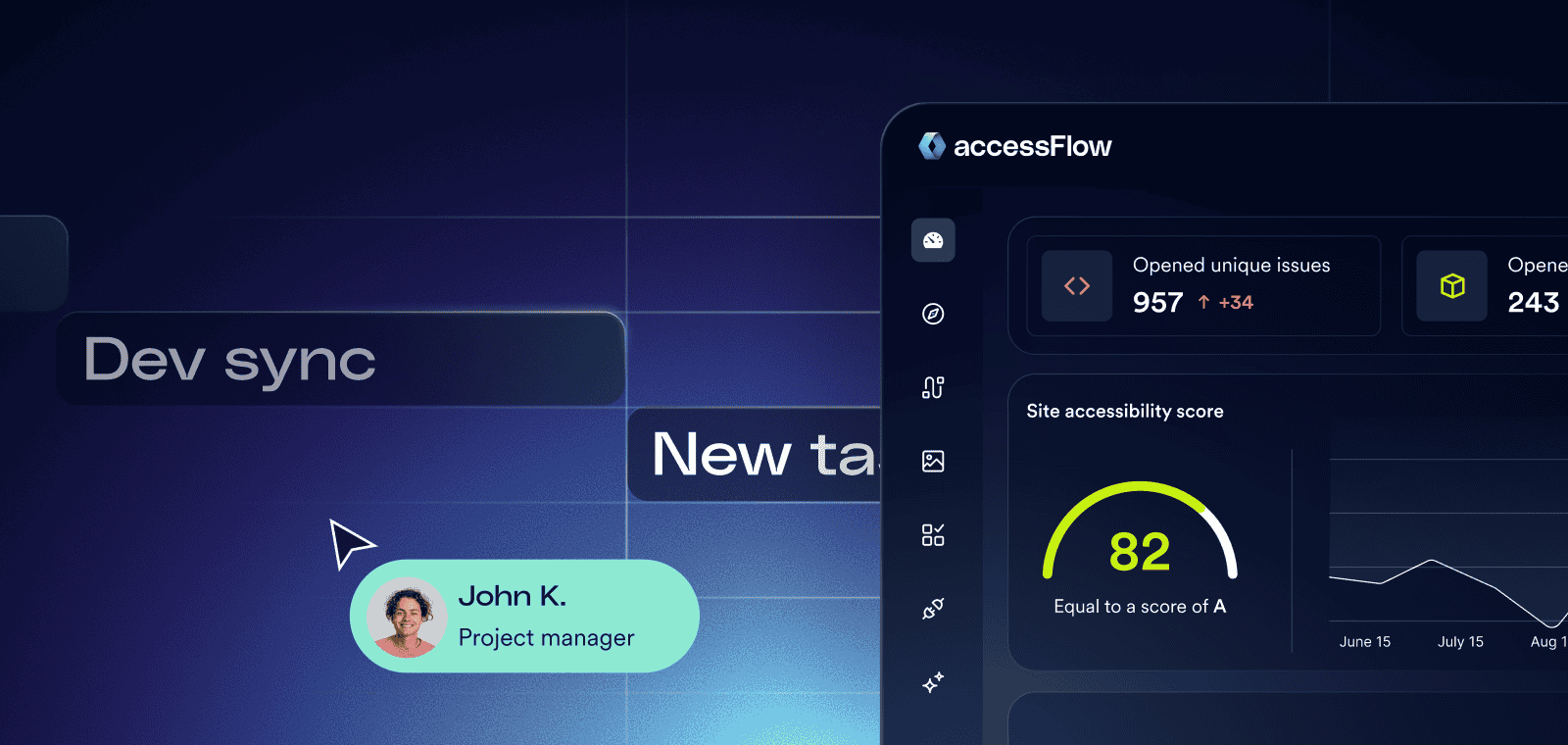
For enterprise organizations, long-term accessibility depends on how digital experiences are built at the code level. Structural elements such as semantic HTML, keyboard operability, focus management, and ARIA logic form the foundation that assistive technologies rely on. When these foundations are strong, digital products are more predictable, more usable, and better aligned with accessibility expectations.
Code-based accessibility also supports the scale and pace of enterprise development.
Large organizations manage complex architectures with shared components, design systems, and parallel development streams. When accessibility is embedded directly into these systems, improvements ripple across entire product suites rather than being applied page by page. This helps teams maintain consistency, reduce regressions, and avoid repeatedly fixing the same issues in different parts of the codebase.
Enterprises improving existing products also benefit from this approach.
By integrating accessibility considerations into development workflows, teams can address structural barriers more effectively and prevent issues from reappearing as new features are introduced.
Automated tools still play a meaningful role, but code-based accessibility provides the durability and predictability needed to support broader usability and compliance efforts over time.
How CI/CD workflows strengthen code-based accessibility
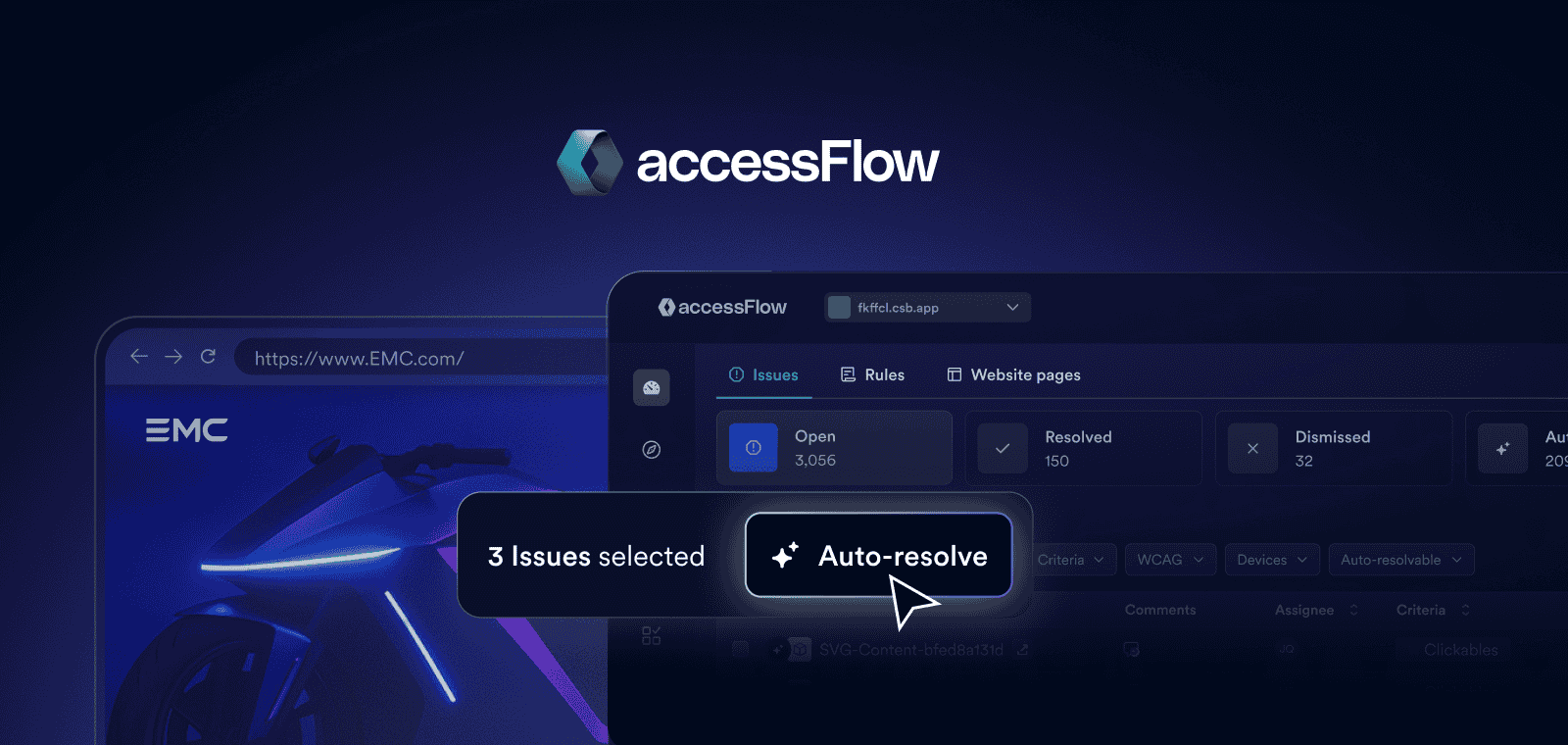
For enterprises investing in code-level accessibility, CI/CD workflows offer a practical way to support that effort at scale. As teams merge changes, update components, and release new features, CI/CD pipelines provide natural checkpoints where accessibility can be reviewed alongside performance, reliability, and other engineering criteria.
Because frequent updates can introduce new barriers—even in small changes—some organizations are now adopting developer platforms that bring accessibility directly into the engineering process, like accessFlow.
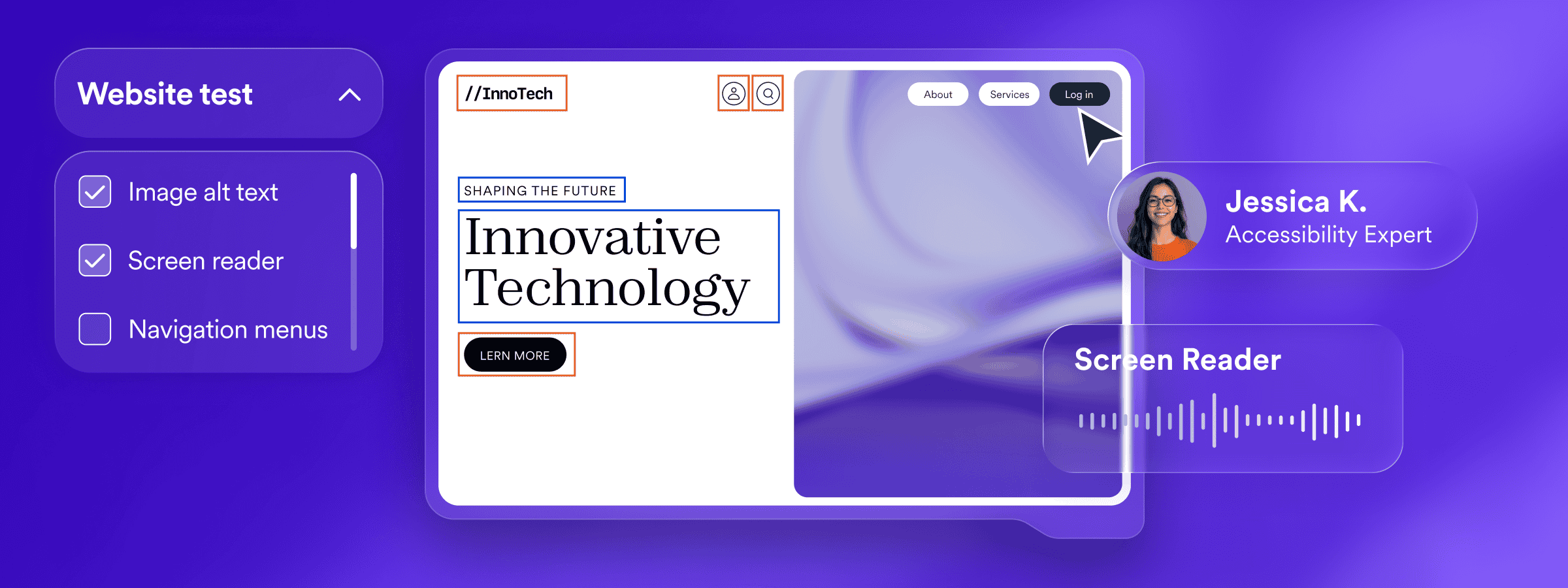
By integrating accessibility checks into existing development pipelines, accessFlow helps developers identify issues earlier, understand their root causes, and address them before they reach production. This allows accessibility to move at the same pace as the product itself rather than being handled only during periodic reviews.
accessFlow also supports accessible development from within the tools engineers already use.
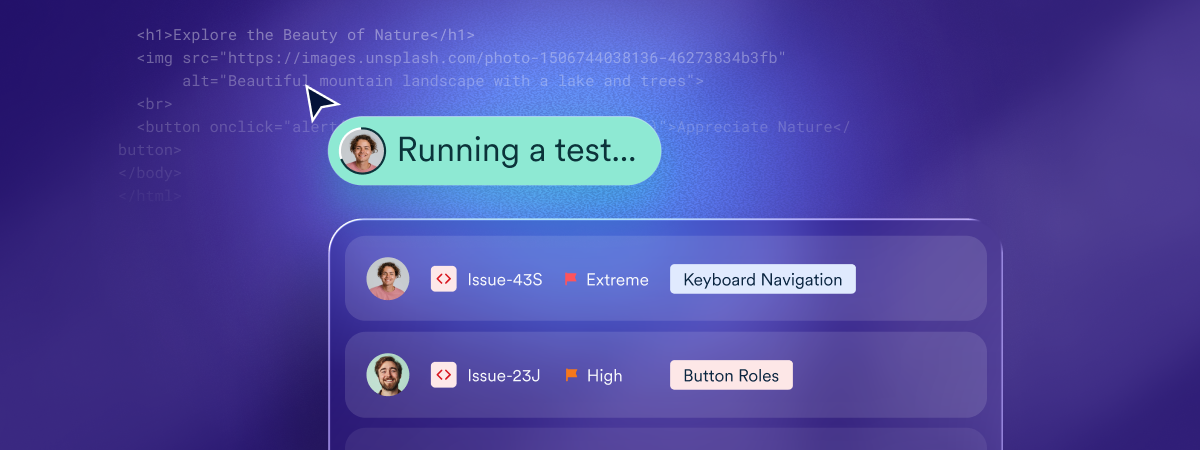
accessFlow’s SDK enables automated accessibility testing as part of CI/CD, and its Model Context Protocol (MCP) integration provides real-time guidance inside the developer’s environment.
Instead of waiting for a later audit to reveal issues, teams receive contextual feedback as they write and refine code—making it easier to apply WCAG-aligned patterns consistently across shared components, features, and applications.
Over time, this approach strengthens the foundation of enterprise accessibility.
With code-level issues surfaced early and regressions caught automatically through CI/CD, organizations create a more stable, predictable path toward maintaining accessibility across fast-moving digital ecosystems.
Building accessible products from the ground up — and improving existing ones
Enterprise organizations typically fall into two categories: those building new digital products and those maintaining large, established systems.
For teams creating something new, embedding accessibility from the start helps ensure that component libraries, interaction patterns, and design systems follow WCAG expectations before they scale across multiple applications. With tools like accessFlow, developers can validate accessibility as they code and build accessible foundations that support long-term usability.
Teams improving existing products face a different set of challenges, often working with legacy components, complex architectures, and workflows that have evolved over time. Integrating accessFlow into CI/CD pipelines gives developers earlier visibility into potential issues and helps prevent regressions as updates are released. This supports a more iterative, sustainable path toward remediating structural barriers already present in the system.
In both scenarios, accessFlow’s integrations with work-management platforms help teams operationalize accessibility.
Findings flow directly into tools like Jira, making accessibility tasks a natural part of existing engineering planning and prioritization. This ensures that accessibility improvements are tracked, assigned, and resolved the same way other critical development work is—supporting consistency and long-term maintainability across enterprise environments.
Balancing automation and code-level accessibility in enterprise workflows
While enterprises are often best suited to address accessibility issues on a code level, that doesn’t mean they can’t benefit from leveraging automation as part of the process. In many cases, combining both approaches creates a more stable, predictable path toward accessibility—supporting real users in the short term while development teams work on long-term, WCAG-aligned improvements.
accessWidget helps by automatically auditing and remediating many accessibility issues on a session basis. Powered by accessiBe’s patented AI, it detects common barriers and applies real-time adjustments that improve how content is interpreted by assistive technologies. For organizations with large, frequently updated websites, this helps maintain a higher level of accessibility coverage during active development cycles, so users encounter fewer barriers even as the underlying code is being improved.
Within accessFlow, developers can still take advantage of AI to streamline their remediation work through auto-resolve.
The auto-resolve feature allows teams to apply session-based remediation to many repetitive or pattern-based issues directly in their workflow. This helps reduce the volume of immediate fixes and gives developers more space to focus on complex, labor-intensive tasks—such as refining semantic structure, improving component behavior, and resolving intricate interaction patterns.
As development progresses, teams can return to these auto-resolved items and implement permanent, code-level fixes to strengthen long-term accessibility across their product.
The path forward for enterprise accessibility
As enterprise digital systems continue to expand, accessibility becomes a sustained engineering effort—something that evolves alongside every release, update, and architectural change. The most dependable progress comes when accessibility is built into development workflows, supported by tools that give teams visibility, guidance, and the ability to act on issues as they arise. With code-based remediation through accessFlow and automated support from accessWidget, enterprises can strengthen their accessibility foundation while ensuring that users encounter fewer barriers throughout ongoing development.
No two organizations take the same path, but the goal is shared: creating digital experiences that are reliable, usable, and inclusive for everyone. By pairing automation with structured engineering practices—and by adopting tools that support both immediate improvements and long-term stability—enterprises can build accessibility programs that scale, adapt, and deliver meaningful outcomes over time.
To learn more about how accessiBe can help you in your accessibility efforts, press here.
Frequently asked questions about accessibility in enterprise CI/CD workflows
Q1. Why is accessibility especially challenging for enterprise organizations?
A1. Enterprise digital environments are complex, with large codebases, shared components, distributed teams, and frequent releases. These factors create more opportunities for accessibility issues to appear and reappear as products evolve.
Q2. How do the ADA and WCAG apply to enterprise websites and applications?
A2. The ADA establishes the legal expectation that digital experiences are accessible, while WCAG provides the technical guidelines websites should conform to. For enterprises, aligning with WCAG is an ongoing effort rather than a one-time project.
Q3. Why isn’t accessibility a one-time remediation task at enterprise scale?
A3. Because enterprise systems change constantly, new features and updates can introduce barriers even after issues are fixed. Accessibility needs to be maintained continuously as part of regular development cycles.
Q4. What role do CI/CD pipelines play in supporting accessibility?
A4. CI/CD pipelines create natural checkpoints where accessibility can be evaluated alongside performance and reliability. Integrating accessibility into these workflows helps teams catch issues earlier and reduce regressions before changes reach production.
Q5. Why is code-level accessibility important for long-term results?
A5. Structural elements like semantic HTML, keyboard operability, focus management, and ARIA logic form the foundation of accessible experiences. Addressing these at the code level leads to more durable, predictable accessibility outcomes across products.
Q6. How does accessFlow support accessibility within development workflows?
A6. accessFlow integrates accessibility auditing, guidance, and remediation into the tools developers already use, including CI/CD pipelines. This allows teams to identify issues early, understand root causes, and apply WCAG-aligned fixes during development.
Q7. Can automation still play a role in enterprise accessibility programs?
A7. Yes. Automated solutions like accessWidget help address many issues on a session basis and support users while code-level remediation is underway. Combining automation with native remediation creates a more balanced, scalable approach.
Q8. What does a sustainable path forward for enterprise accessibility look like?
A8. Sustainable accessibility is built into everyday engineering practices, supported by visibility, tooling, and clear workflows. By pairing CI/CD-integrated development with automated support, enterprises can create accessibility programs that scale and adapt over time.