I’m a forever optimist, and I’ve always loved the new year. Not because it magically resets the hard stuff, but because I’ve seen how real progress comes from sustained effort.
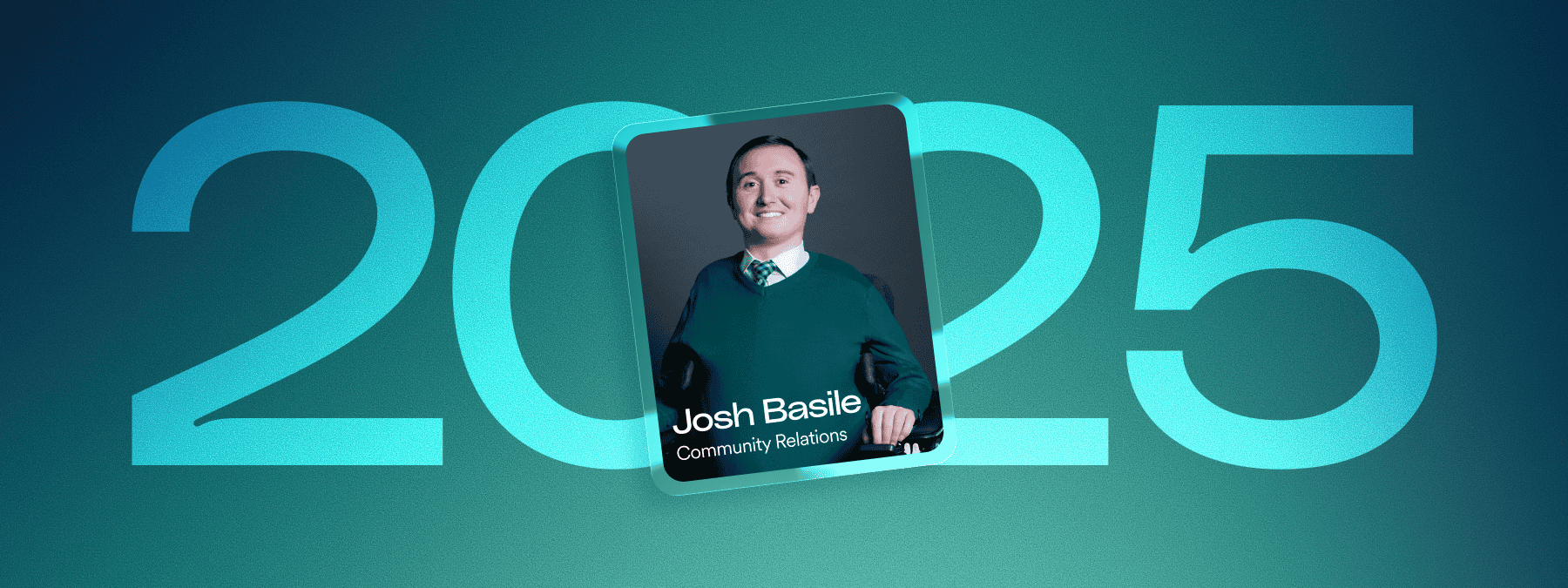
As a C4-5 quadriplegic, disability rights advocate, and trial attorney I’ve experienced firsthand how accessibility has shifted from a policy discussion to a matter of operational readiness. This shift was unmistakable in 2025.
Digital accessibility enforcement accelerated globally this year. ADA lawsuits continued to trend upward, with estimates approaching 5,000 cases annually. We saw the European Accessibility Act (EAA) begin enforcement in June, and organizations receiving public funding rushed to prepare for new ADA Title II requirements going into effect in April 2026.
What should we take away from this? The internet is a public counter – a digital front door to healthcare, education, and commerce. That door needs to be open to everyone.
A personal moment that put it all in perspective
This year also brought a personal milestone I’ll never forget: in August, my wife and I found out we’re having our third child in 2026. That kind of joy has a way of sharpening your purpose. I don’t just want a more accessible world in theory, I want it for all of us and for our future.
Here are the moments that defined my year—across community, product, research, advocacy, and a lot of relationships built in between:
The regulatory reality: Accessibility as infrastructure
Accessibility is no longer interpretive, and teams cannot defer it as a “one-time” project. It is an expectation that fundamentally changes how businesses operate day to day. With new enforcement deadlines arriving, the organizations that are best positioned for success are the ones that operationalize accessibility sooner rather than later. Teams that delay are forced into reactive remediation, while those that operationalize early gain predictability and control
- The European Accessibility Act (EAA): As of June 2025, businesses offering digital services into the EU must meet accessibility requirements. In practical terms: if you sell to EU consumers, your entire customer journey—from discovery and product pages to checkout and support—needs to be WCAG-adherent
- ADA Title II: For organizations receiving public funds, the Department of Justice (DOJ) will begin enforcement in April 2026. Public entities will be required to ensure their websites, web apps, and mobile apps conform to WCAG 2.1 Level AA
Together, these changes mean accessibility is no longer something organizations can approach reactively. It has become part of operational readiness. accessiBe’s ecosystem offers a platform of solutions that help businesses of all sizes adapt as these expectations evolve.
Building with the disability community
With expectations rising, how solutions are built matters more than ever. This year, accessiBe welcomed new leadership and initiatives that bring the disability community to the table.
One of the proudest moments of my year was helping kick off accessiBe’s Inclusive Product Advisory Board, bringing together 15 technology leaders and advocates from accessiBe’s Nonprofit Program to drive our roadmap.
The formation of this advisory board, along with our accessLabs team of blind usability testers who work with our R&D, isn’t just a press moment. It’s a signal of intent: accessiBe is reaffirming that product innovations are guided by the people who rely on accessible experiences every single day.
That same philosophy extends beyond the screen. accessiBe’s partnership with RightHear reflects how digital accessibility connects with real-world navigation, expanding access across both physical and digital environments. Under our new CEO, Robert Lopez, we have doubled down on this people-first leadership style, ensuring that people and purpose go hand in hand.
When policy gets personal – progress accelerates
It’s impossible to ignore how intertwined digital access has become with our lives: Healthcare systems, government benefits, education, transit, employment all run through websites, portals, and PDFs.
We are already seeing a “readiness gap” in the market between organizations that believe they are accessible and those prepared to demonstrate it. This is why I urge teams to treat accessibility as an ongoing operational discipline, not a one-time compliance sprint. Digital accessibility isn’t separate from civil rights – it’s one of the main roads.
You don’t have to be a lawyer to help change the law. You just have to share your story, show up, and keep going.
Bridging the readiness gap with data
Research from accessiBe’s 2025 eCommerce trends survey puts numbers behind the urgency for accessibility. While many eCommerce leaders believe their digital storefronts are accessible, our data highlights a significant “readiness gap”.
Here’s what our survey of over 300 industry leaders revealed:
- The litigation gap: 71% of eCommerce leaders report concern about digital accessibility-related legal risks , but only 43% currently allocate resources to improve their posture
- The AI discoverability shift: 74% of leaders are already adjusting product content to be AI-chat friendly. However, many don’t realize that WCAG-adherent, structured data is the most reliable way AI assistants can consistently “read” and recommend their products
- Preventable revenue loss: Cart abandonment averages 70% globally. 87% of leaders agree that applying accessibility best practices directly reduces friction and recovers lost sales at checkout
When businesses move from viewing accessibility as a “one-time” checklist to an ongoing operational discipline, they unlock several competitive advantages:
- Better customer experience: Simplified flows and clear error handling benefit every user
- Stronger brand trust: Inclusive design signals a commitment to Corporate Social Responsibility (CSR)
- Mitigated legal risk: Proactive remediation reduces exposure to demand letters and lawsuits
- Broader market reach: You open your digital doors to a group commanding $13 trillion in annual disposable income
How accessiBe’s end-to-end solutions supports your journey
At accessiBe, we don’t just build tools; we build them in partnership with the people they are designed to serve. By integrating community insight guided by our Inclusive Product Advisory Board, and validated by accessLabs, we do more than help you meet regulatory standards. We help you navigate your digital accessibility journey with an integrated ecosystem of solutions.
- accessWidget: Provides immediate, AI-powered session-based adjustments for inclusive browsing
- accessFlow: Empowers your development team to build accessible code from the ground up within your existing workflows
- accessServices: Offers expert-led manual audits, user testing by people with disabilities, and document remediation
Looking ahead
If 2025 was about anything, it was the momentum of policy turning into readiness. We’ve seen that progress accelerates when lawmakers understand lived experience, and when product teams listen to users with disabilities early in the process.
It takes businesses that treat accessibility as an opportunity, not just a risk. And it takes a community that keeps showing up — again and again to build a more equitable future.