As digital ecosystems grow in size, complexity, and visibility, enterprise and mid-market organizations face increasing pressure to ensure their websites, applications, and customer experiences are accessible to people with disabilities. Accessibility is no longer a standalone initiative—it is an ongoing, strategic responsibility that affects usability, compliance, brand reputation, and operational risk.
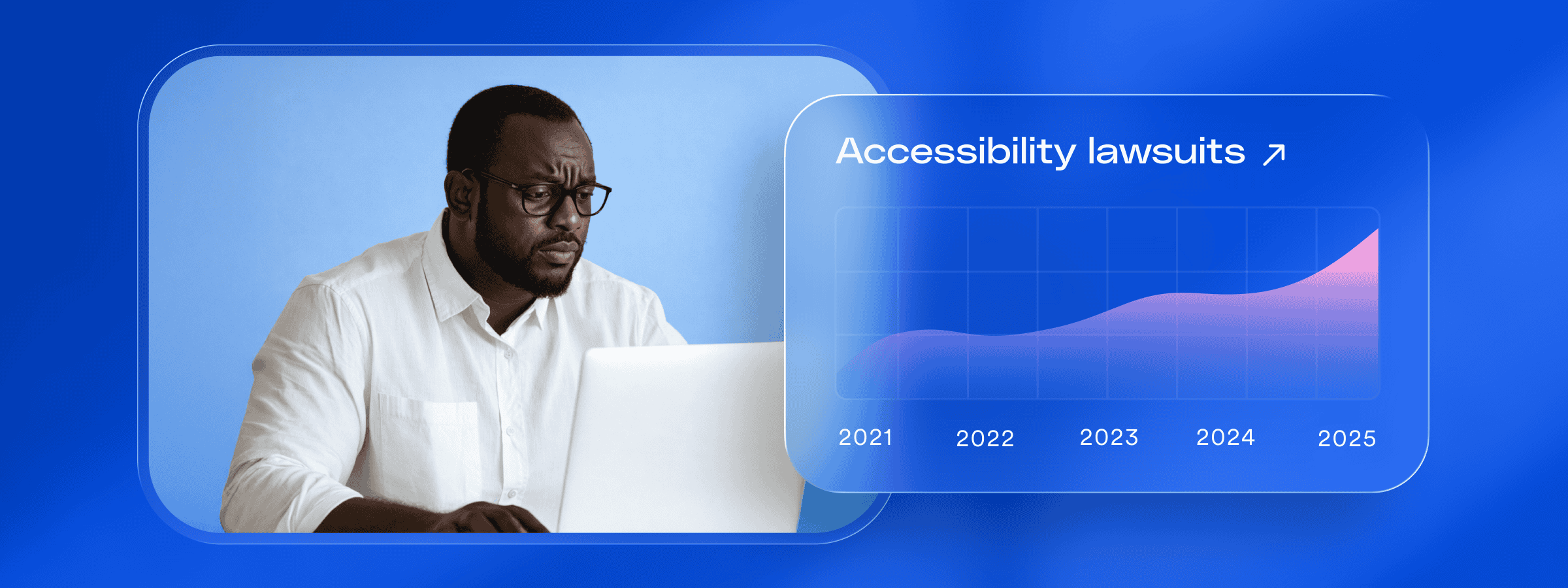
At the same time, legal scrutiny surrounding digital accessibility continues to rise. Organizations with large digital footprints are more likely to attract attention from users, advocacy groups, and law firms monitoring for accessibility barriers. When claims arise, enterprises need more than technical solutions—they need a platform and partner that help them both improve accessibility and demonstrate the substantive work they are doing.
Integrated legal support has become a critical part of modern accessibility programs, offering organizations the confidence, documentation, and expert insight needed to navigate today’s regulatory and legal landscape while building more inclusive digital experiences.
The digital accessibility legal landscape enterprises face today
Enterprise organizations operate under a higher level of scrutiny when it comes to digital accessibility. Large websites, customer portals, and application workflows serve broad audiences—and when barriers exist, they have a wider impact. As a result, these organizations are more likely to attract attention from users, advocacy groups, and law firms that monitor digital experiences for accessibility issues.
In the United States, the Americans with Disabilities Act (ADA) is widely interpreted to apply to websites and digital services, creating clear expectations that they be accessible to people with disabilities. Across the European Union, the European Accessibility Act (EAA) establishes similar requirements for essential digital products and online services. While the specific legal frameworks differ, they share an underlying principle: organizations are responsible for ensuring their digital experiences are accessible, usable, and inclusive.
For enterprises, this responsibility grows more complex as digital environments expand.
Frequent updates, third-party integrations, and large volumes of content increase the likelihood that accessibility issues will emerge over time.
Demand letters, lawsuits, and reputational risk: a new reality for larger organizations
In recent years, several well-known brands have been named in digital accessibility lawsuits, reflecting a broader trend affecting organizations with significant online visibility. Companies such as Hasbro, Panama Jack, Roblox, and Zillow were involved in publicly reported cases where users alleged barriers that prevented effective use of websites or applications with assistive technologies.
These examples highlight a clear pattern: the larger and more prominent a digital experience becomes, the more closely it is scrutinized for accessibility.
When barriers are found—whether missing labels, inaccessible workflows, or screen reader incompatibilities—organizations may face demand letters, lawsuits, or reputational impact.
Comprehensive litigation support: a non-negotiable component of enterprise-grade accessibility solutions
The right accessibility platform does more than help enterprises improve their digital experiences—it also equips them to respond confidently when legal questions arise. As organizations grow and their digital ecosystems become more visible, the ability to demonstrate ongoing accessibility work becomes just as important as the work itself. That’s why enterprise-grade solutions must pair robust accessibility capabilities with clear, reliable litigation support.
When demand letters or claims surface, enterprises need structured documentation, expert guidance, and a credible record of the steps they are taking to align with accessibility expectations. Platforms that combine technology with dedicated legal support give organizations the clarity they need to address inquiries, reduce uncertainty, and show meaningful, good-faith progress.
Attorney consultation, documentation, and tailored responses: what to know about accessiBe’s litigation support
accessiBe’s Litigation Support Program is designed to help enterprises navigate accessibility claims with confidence and clarity. When an organization receives a demand letter or faces an ADA-related inquiry, having structured guidance and credible documentation becomes essential. This program provides access to ADA-focused legal consultation, detailed product documentation, and expert review to help organizations demonstrate the accessibility work they are actively doing.
Real-world results: how accessiBe’s litigation support helps organizations respond with confidence
accessiBe’s litigation support program has already helped organizations across industries resolve accessibility claims quickly and effectively—often preventing escalation and protecting both resources and reputation. Two recent examples illustrate how structured documentation, expert guidance, and attorney involvement make a measurable difference:
1. A fast-growing DTC furniture brand gets its ADA lawsuit dismissed
A New York–based eCommerce company with more than 250,000 monthly visitors received a demand letter from a high-volume serial plaintiff, despite having invested significantly in accessibility through ongoing remediation, audits, and a public accessibility statement.
After activating accessiBe’s Litigation Support Package (LSP), the company was paired with a dedicated case manager and a top ADA attorney specializing in web-accessibility litigation. The package also supplied proof of accessibility efforts, IAAP-certified expert analysis, and multi-tool verification reports.
Armed with strong documentation and expert-backed responses, the company successfully achieved a full dismissal of the claim—all without diverting internal resources from critical work.
Read full case study by pressing here.
2. A women’s fashion brand defeats an unfounded accessibility lawsuit
For Love & Lemons (FL&L), a leading U.S. fashion brand, had long valued accessible online experiences and had been an accessiBe customer for years. Despite their ongoing commitment, they were targeted by a serial accessibility plaintiff and faced an ADA lawsuit in Federal Court.
Upon receiving the complaint, FL&L immediately activated accessiBe’s litigation support services, which included:
- Direct access to an ADA attorney
- Robust compliance documentation
- Manual and automated accessibility reviews
- A meticulous website audit demonstrating real accessibility progress
Within five months, the lawsuit was dismissed by the plaintiff—with zero settlement costs. The law firm pursuing the suit withdrew its complaint entirely.
This swift and decisive outcome not only protected FL&L financially, but also reinforced their long-term accessibility strategy and confidence in the platform they had partnered with.
Read full case study by pressing here.
Building accessibility and legal confidence into enterprise growth
For enterprises, accessibility is both an operational commitment and a legal responsibility. As digital experiences expand in scale and visibility, the ability to back up accessibility efforts with credible evidence, expert guidance, and organized documentation becomes essential—especially when claims or inquiries arise. Modern organizations need accessibility solutions that do more than improve interfaces; they need support that reinforces their compliance posture and protects their brand.
accessiBe’s integrated litigation support delivers that foundation.
By combining AI-powered accessibility technology with expert analysis, attorney consultation, and structured documentation, enterprises gain a partner equipped to help them demonstrate ongoing accessibility progress and respond confidently to legal challenges.
This level of support allows organizations to continue building inclusive digital experiences while knowing they have a trusted framework in place to navigate the realities of today’s legal landscape.
Building accessibility and legal confidence into enterprise growth
For enterprises, accessibility is both an operational commitment and a legal responsibility. As digital experiences expand in scale and visibility, the ability to back up accessibility efforts with credible evidence, expert guidance, and organized documentation becomes essential—especially when claims or inquiries arise. Modern organizations need accessibility solutions that do more than improve interfaces; they need support that reinforces their compliance posture and protects their brand.
accessiBe’s integrated litigation support delivers that foundation.
By combining AI-powered accessibility technology with expert analysis, attorney consultation, and structured documentation, enterprises gain a partner equipped to help them demonstrate ongoing accessibility progress and respond confidently to legal challenges.
This level of support allows organizations to continue building inclusive digital experiences while knowing they have a trusted framework in place to navigate the realities of today’s legal landscape.
To learn more about accessiBe’s Litigation Support Package, press here.